
The César Manrique Route: The Man Who Built Modern Lanzarote
Lanzarote could have ended up looking like any sunny island with high-rise hotels and neon signs. It did not, and one man has a lot to do with it. César Manrique was born in Arrecife, made his name as an abstract painter and then came home to turn lava tubes into concert halls, quarries into gardens and viewpoints into works of art. Driving his route is the best day you can spend on this island. Here is how I do it, stop by stop.
⚡ Quick summary before you plan your days in Lanzarote
- What to know firstLanzarote could have ended up looking like any sunny island with high-rise hotels and neon signs.
- Who it is forPeople ask me what to see first in Lanzarote and I always give the same answer: the beaches will still be there on Sunday, start with Manrique.
- Main optionsWhy César Manrique Matters More Than Any Beach · The Masterpieces: Jameos del Agua and Cueva de los Verdes · Mirador del Río and the Jardín de Cactus · Driving the Route: One Big Day Around the Island
- Duration, prices and detailsHow long does the César Manrique route take? A full day if you want the four big sites plus the Fundación and a proper lunch. With half a day, choose Jameos del Agua and Mirador del Río and save the rest for next time. The driving itself…
- How to bookBook on WhatsApp · +34 603 27 93 06


📷 Gallery
🧭 Zack's 3-click Lanzarote experience planner
💬 Send my plan to Zack on WhatsApp
Because a tour should feel like travelling with a friend: Zack designs the route around your rhythm, your curiosity and your camera roll — and changes it whenever you wish.
Why César Manrique Matters More Than Any Beach
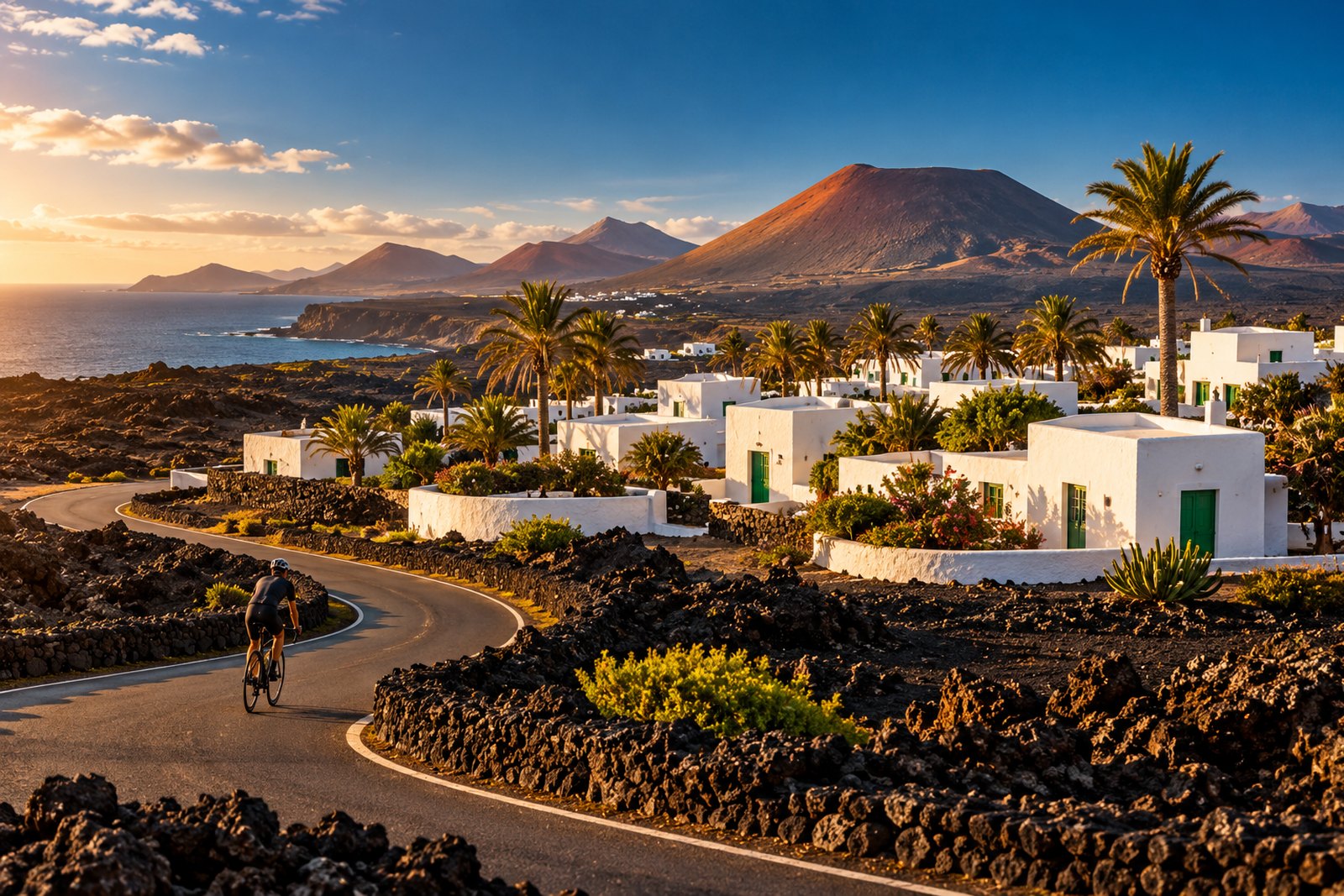
People ask me what to see first in Lanzarote and I always give the same answer: the beaches will still be there on Sunday, start with Manrique. Not because the art is solemn or educational, but because once you have seen what he did with this island, you start to see the whole place differently. The white villages, the green doors, the low skyline, the way the buildings hug the lava instead of fighting it: that is not luck, that is a design, and he is the reason it exists.
When mass tourism arrived in the nineteen seventies, Lanzarote stood at a crossroads. The easy money was in concrete towers and cheap package holidays, and other islands took it. Manrique argued for the opposite: keep the island low, keep it white, keep the volcanoes untouched and build tourism around the landscape instead of on top of it. He did not win every battle, but he won the ones that mattered, and today the island is a UNESCO Biosphere Reserve where the view from your breakfast table is still black lava and blue ocean.
His idea was simple enough to fit on a postcard and hard enough to spend a lifetime on: art in harmony with nature. Not art that decorates nature, not art that conquers it, but work that sits inside a cave, a cliff or a crater and makes you look at it again. He called it arte-naturaleza, and once you have stood in the middle of it, the phrase stops being a slogan and becomes obvious.
What he left behind is a network of art centres scattered across the island: Jameos del Agua, Cueva de los Verdes, Mirador del Río, the Jardín de Cactus, the fire mountains of Timanfaya, the old castle in Arrecife and the farm museum in the middle. You can visit them one by one over a week, or you can drive the big loop in a day, which is what most of my friends and family do on their first proper visit.
Born in Arrecife, Made in Madrid and New York
César Manrique was born in Arrecife in 1919 and grew up between the sea and the volcanoes, which in hindsight explains a lot. He studied art in Madrid, spent years painting abstract canvases and then headed to New York, where the art world of the sixties sharpened his ideas about colour, matter and space. When he came back to Lanzarote for good, he brought all of that with him and pointed it at the landscape he was born in. The island got the better deal.
The House in the Lava: Fundación César Manrique
His home in Tahíche is the best introduction to the man. He built it in the nineteen sixties on top of five huge bubbles of black lava left by the seventeen hundreds eruptions, linking them with white rooms, a courtyard and a palm garden, so that the house feels half cave, half palace. It is now the Fundación César Manrique, and walking through his studio, his library and that lava living room is the closest you can get to understanding how his mind worked. If you only visit one thing before the route, make it this one.
The Masterpieces: Jameos del Agua and Cueva de los Verdes
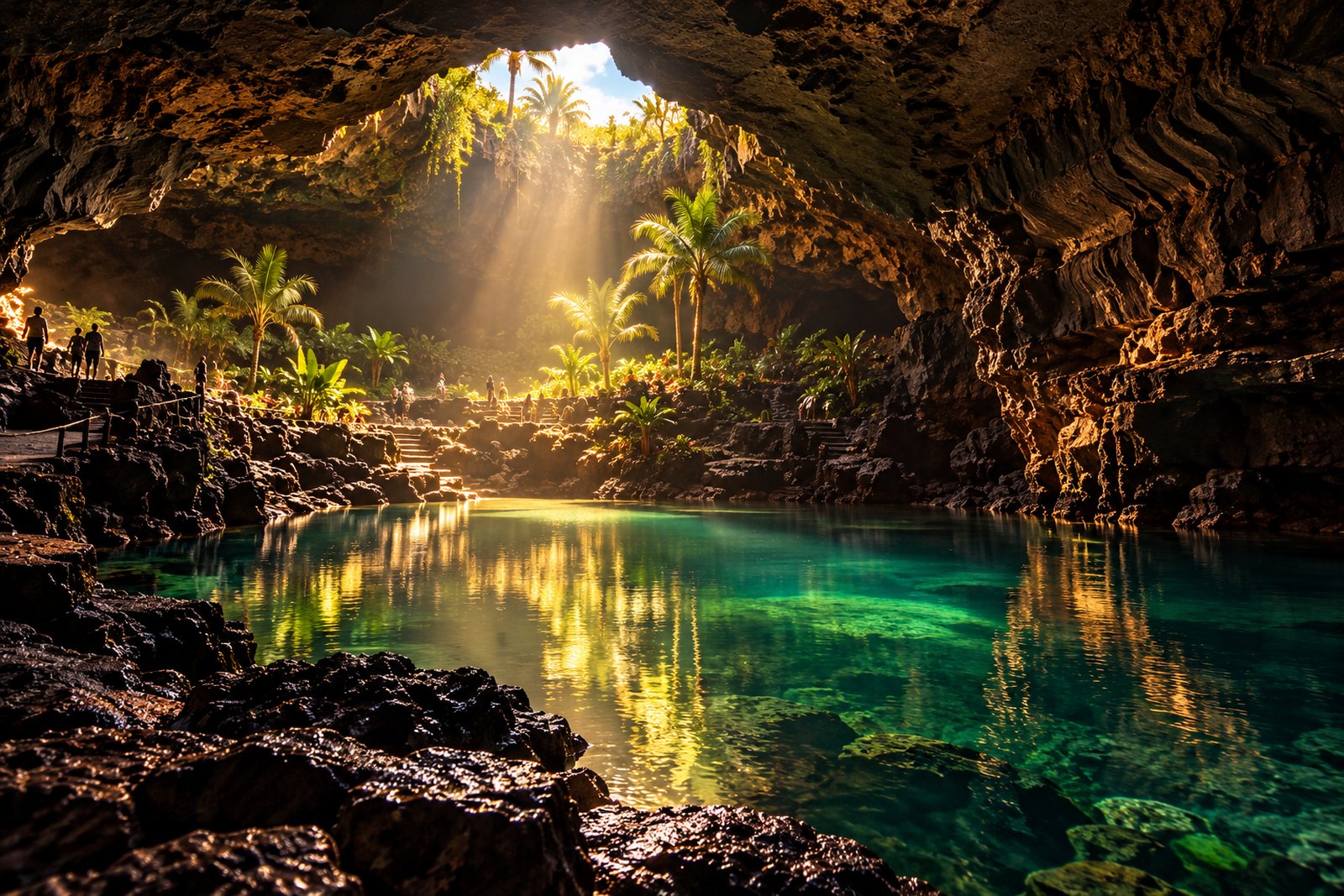
Both of these live inside the same giant: the Corona volcano, whose lava once flowed all the way to the sea and left behind one of the longest volcanic tubes on the planet. The tube runs for kilometres, partly under the ocean, and where its roof collapsed it opened the skylights that the locals call jameos. Manrique looked at those holes in the ground and saw a cathedral, a concert hall and a garden. What he built there in the sixties still feels ahead of everyone.
Jameos del Agua is the first centre he created and the one that tells you the whole story in ten minutes. You climb down into a cavern with an underground lake so clear it looks fake, home to a tiny blind crab found nowhere else on earth, the jameito. Then the passage opens into a garden of palms and cactus growing out of black rock, with a white bar, a dance floor and an auditorium carved into the lava where they still hold concerts because the acoustics are that good. There is a famous emerald pool too. Admire it, do not swim in it.
Cueva de los Verdes is the same volcano from the inside, and it is wilder. A guided path takes you through galleries where the lava froze mid-flow into waves, folds and colours that no painter would dare invent, all lit so the rock does the talking. It was used for centuries by locals hiding from pirates, which gives the place a nice edge. I will not spoil the end of the tour: just keep walking and look where the guide tells you to look.
Practical stuff, because these are the two busiest stops on the island. Both belong to the island's art centre network and the smartest move is to buy your tickets online before you go, especially for Cueva de los Verdes where entry runs on timed slots. Go in the morning, before the tour buses, and you will get the caves almost to yourself for the first half hour.
Jameos del Agua: Music in the Dark
The concert hall is a natural cavern with a ceiling that swallows every echo wrong and gives every note back right, which is why orchestras and musicians from all over the world have played here at night, by candlelight. Even without a concert, sit on the stone steps for a minute and listen to the silence between the water and the rock. That silence is the reason Manrique came home.
Cueva de los Verdes: Inside the Volcano
The tour runs about a kilometre through the lava tube and takes less than an hour, but you will remember it longer than any beach day. The temperature inside is mild all year, so it is a perfect plan for windy days or when the sun is too strong. Wear something with grip on your feet: the path is smooth and dark in places, and the lava does not do soft landings.
Mirador del Río and the Jardín de Cactus
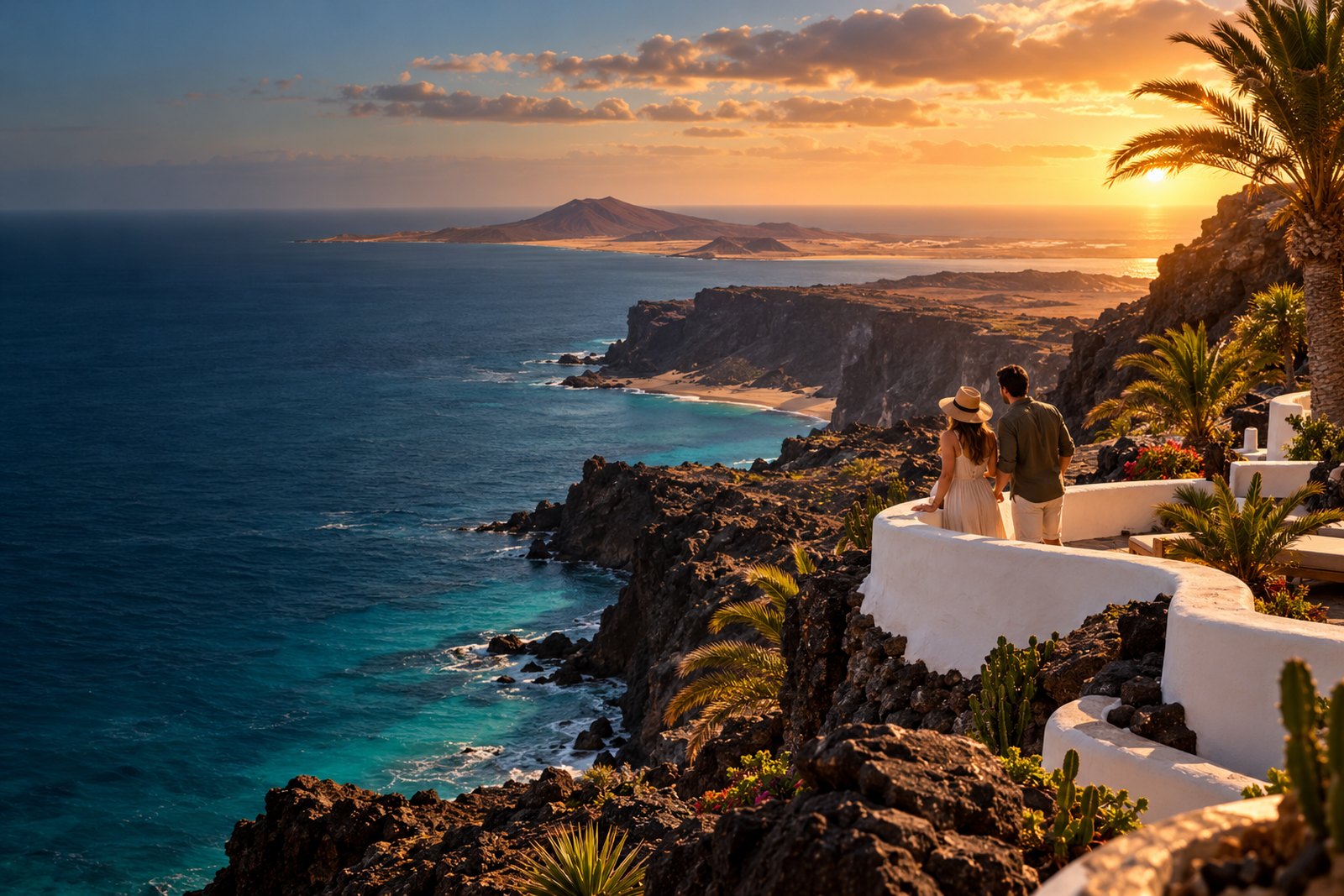
At the northern tip of the island, four hundred metres up on the rim of the Famara cliffs, Manrique built a viewpoint into the rock and hid it from the outside. From the road you see a low mound of volcanic stone; inside, a curved white room with huge windows opens onto one of the greatest views in the Canaries: the strait they call El Río, the sandbanks, and the island of La Graciosa floating on turquoise water like a postcard nobody believed was real. There is a café up there. Use it.
The drive up is half the pleasure. The road climbs through Haría, the valley of a thousand palms, where the houses are whiter than anywhere else and the pace drops to walking speed. On Saturday there is a little market under the palms, and any day of the week there is a terrace with your name on it. Give yourselves an hour here instead of rushing to the viewpoint; the north rewards people who slow down.
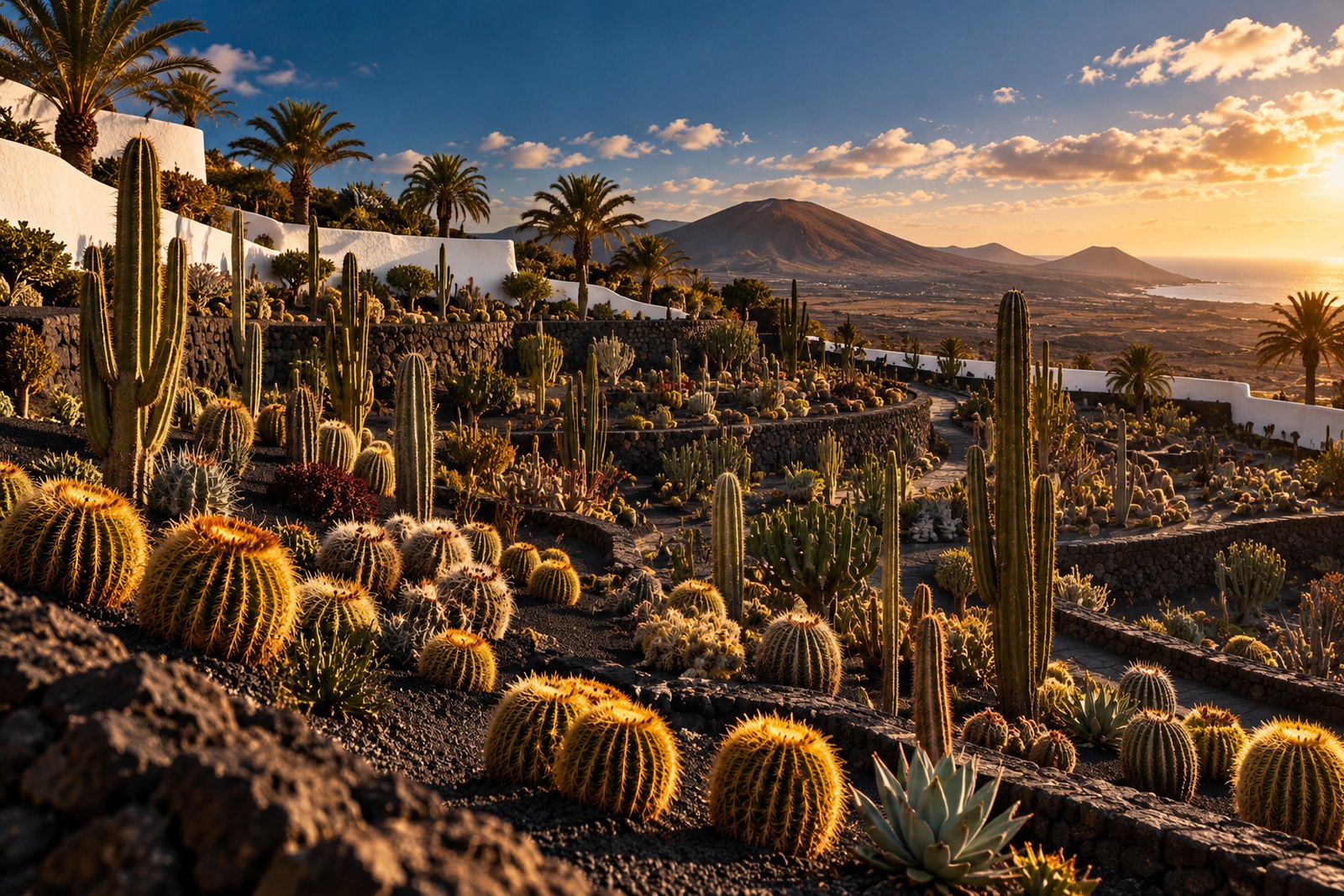
The Jardín de Cactus is Manrique's last big work on the island and, in a way, his most playful. It sits in Guatiza, in an old quarry where they once dug volcanic gravel for the fields, and he turned the excavation into a spiral amphitheatre of terraces planted with thousands of cacti from every corner of the planet. Big spiky monsters next to tiny round ones, a windmill on top, a pond with lilies, and not one straight line in sight. Even people who claim to hate gardens come out smiling.
If the day still has room in it, add the little stops along the way. The Monumento al Campesino in San Bartolomé is his tribute to the island's farmers, a white tower of old water tanks that you can see from the road. And between the villages you will find the vineyards of the volcanic valley, where a wine tour in La Geria is the perfect way to end a day of art with a glass of something the island grew in the ash.
The Window onto La Graciosa
Go to Mirador del Río late in the afternoon if you can, when the light turns gold over the strait and the day trippers have gone back down. On clear days you can see the whole north coast of Fuerteventura, and on windy days the clouds pour over the cliff edge like a slow waterfall. Either way, stand still for five minutes. This is the view that convinced Manrique the island deserved better than tower blocks.
The Last Masterpiece in Guatiza
The cactus garden shows what he could do with nothing but patience and a hole in the ground. The terraces follow the shape of the old quarry, the paths spiral up to the windmill, and every plant was chosen and placed like a brushstroke. It is small enough to visit in forty minutes and strange enough to remember for years. Go around noon, when the spines are backlit and the whole garden glows.
Driving the Route: One Big Day Around the Island
Here is the loop I drive with friends who have one full day and want the whole story. Start early from the south and head for Tahíche and the Fundación before the tour buses arrive, then drop down to Guatiza for the cactus garden while the light is still soft. From there the road climbs north through the palm valley of Haría and up the cliff to Mirador del Río. After the view, come down to the Corona tube for Cueva de los Verdes and finish at Jameos del Agua, which is at its best in the late afternoon when the light falls through the skylights.
Timing matters more than speed. Leave by eight thirty, book your Cueva de los Verdes slot online for late morning, and keep lunch flexible: there are good simple tables in Haría and in the fishing village of Arrieta, right by the pier. The whole loop is under a hundred kilometres of easy driving, but with the stops, the photos and a long lunch it fills a day properly. If you would rather not drive at all, my excursions in Lanzarote cover the route with someone else doing the parking.
This is a great day for families, by the way. The caves thrill kids, the cactus garden gives them space to run, and the viewpoints are the kind of place where nobody checks their phone. If your group wants two wheels instead of four, I rent bikes at the shop in Puerto del Carmen: a day out on a bike between the villages of the south is a different way to taste the same landscape, and the quiet roads around Teguise are made for it.
Whatever you do, do not try to squeeze the whole route in after a late breakfast and expect miracles. Pick the four big sites, leave room for a coffee in a village square and let the island do the talking. And if you want a hand planning it, come and find me at Zack Bike Lanzarote, Calle Roque Nublo 10 in Puerto del Carmen, or just message me on WhatsApp at +34 603 27 93 06. Kids' bikes are 10€ a day, city bikes 15€, mountain bikes 20€ and electric bikes 30€, and the longer you keep them the less you pay per day.
The Loop, Stop by Stop
Fundación at opening time, Jardín de Cactus before the heat, coffee in Haría, Mirador del Río for the view, Cueva de los Verdes late morning, lunch in Arrieta, Jameos del Agua in the golden hour and home before dark. That order follows the light and the crowds, not just the map. If something has to give, drop the cactus garden and keep the rest: the north is where the route earns its reputation.
Tickets, Timing and Local Tricks
Cueva de los Verdes and the fire mountains work on timed online tickets, so book those first and build the day around the slot. Everything else can be bought at the door, but mornings are calmer everywhere. Bring a light layer for the caves, water for the cliff road, and cash for the village cafés, because the best coffee stops are not always the ones with card machines.
You might also be interested in: Car hire in Lanzarote · The best excursions in Lanzarote · Tours around Lanzarote · Bike hire in Lanzarote · Tours & rentals in Haría · Rentals & excursions in Teguise · Lanzarote for families · Lanzarote for couples
Every adventure with Zack follows the same promise: no stress, no surprises, just the right experience at the right moment. Before you even arrive, he is already thinking about the wind, the light, the perfect hour and the little details that turn a holiday into a story you will tell for years. The César Manrique Route: The Man Who Built Modern Lanzarote is not just a booking: it is the beginning of your Lanzarote story.
How it works: from the first message to your best memory
1. Choose your adventure
Scroll through this page and feel what fits you: The César Manrique Route: The Man Who Built Modern Lanzarote, or maybe something different? Every traveller is unique, and Zack knows it. Look at the photos, read the tips, and if you are not sure, that is the best moment to write: telling him who you are and what you love is enough, and he will build the perfect day around it.
2. Book in one message
No forms, no call centres: one WhatsApp message and you are in. Zack replies with availability, the honest price and the plan for the day, including what to bring and when to start. The more days or people, the better the price — and if your plans change, you are talking to a real person who adapts.
3. Live the experience
This is where Lanzarote shows off. The island unfolds in colours you did not expect: black lava, red volcanoes, turquoise water and light that makes everything look like a film. With The César Manrique Route: The Man Who Built Modern Lanzarote you enjoy it your way, with a local team watching over every detail so that your only job is to have the time of your life.
4. Back home, happy
The tan fades, the memories do not. You go home with a phone full of photos, a heart full of stories and that feeling of having discovered a place rather than just visited it. Friends will ask for your itinerary: that is when you know you chose the right adventures.
5. Tell the world
If Zack and his team made your holiday special, the best thank you is a review on Google Maps: sixty seconds that help other travellers find the same magic, and make a local team very proud. Share your story, your photos and your tips — and become part of the Zack Lanzarote family.
Frequently asked questions
How long does the César Manrique route take?
A full day if you want the four big sites plus the Fundación and a proper lunch. With half a day, choose Jameos del Agua and Mirador del Río and save the rest for next time. The driving itself is short; the stops are where the day goes.
Which Manrique site should I visit first?
Start at the Fundación César Manrique in Tahíche to understand the man, then go to Jameos del Agua to understand the work. If you only have time for one, pick Jameos del Agua: it has the cave, the garden, the lake and the story all in one place.
Do I need to book tickets in advance?
For Cueva de los Verdes, yes: entry runs on timed slots and busy days sell out. The other sites usually have room at the door, but booking online keeps your morning relaxed. No prices to memorise here: everything is on the official site of the island's art centres.
Can I do the route without a car?
Yes. Guided excursions cover the whole loop and let you enjoy the views instead of the road. If you prefer your own pace, hire a car for the day or take a bike for the flatter stretches of the south, and I will point you to the roads worth taking.
You may also like

Car hire in Lanzarote
Discover more →
The best excursions in Lanzarote
Discover more →
Tours around Lanzarote
Discover more →
Bike hire in Lanzarote
Discover more →Punta Mujeres: The Fishing Village of Natural Pools
Discover more →San Ginés Festival: Arrecife's Biggest Summer Party
Discover more →Lanzarote Food Guide: Eating Like a Local on a Volcanic Island
Discover more →Puerto del Rosario City Guide: The Real Capital of Fuerteventura
Discover more →Costa Teguise City Guide: Beaches, Wind and the Pueblo Marinero
Discover more →Playa Blanca City Guide: Lanzarote's Sunny Southern Harbour
Discover more →Yaiza and El Golfo: Lanzarote's Green Lagoon and Prettiest Village
Discover more →Puerto del Carmen Neighbourhoods: Centro, Los Pocillos and Matagorda
Discover more →Day Trip from Lanzarote to Corralejo, Fuerteventura
Discover more →Las Palmas de Gran Canaria and the Canary Islands Region
Discover more →Famara and Caleta de Famara: the Wild Side of Lanzarote
Discover more →Arrecife City Guide: the Capital of Lanzarote Beyond the Guidebooks
Discover more →Lanzarote in Autumn: Weather, Beaches and the Best Things to Do
Discover more →Teguise City Guide: the Old Capital and the Sunday Market
Discover more →La Graciosa: How to Visit the Eighth Canary Island
Discover more →Haría and the North of Lanzarote: Valleys, Cliffs and Palm Groves
Discover more →Tinajo and the Volcanic North of Lanzarote
Discover more →Lanzarote in Winter: Weather, Festivals and the Best Things to Do
Discover more →San Bartolomé City Guide: The Agricultural Heart of Lanzarote
Discover more →Lanzarote in Spring: Weather, Beaches and the Best Things to Do
Discover more →Órzola and the Far North: the Fishing Village at the End of the Road
Discover more →Lanzarote in Summer: Long Days, Warm Sea and the Island at Its Best
Discover more →Puerto Calero City Guide: The Marina and the Quiet Side of Lanzarote
Discover more →Maspalomas City Guide: The Dunes and the Sunny South of Gran Canaria
Discover more →Christmas and New Year in Lanzarote: Winter Sun, Fiestas and Local Traditions
Discover more →Betancuria and the Heart of Fuerteventura: the White Town in the Green Valley
Discover more →La Geria and the Volcanic Vineyards of Lanzarote
Discover more →Ironman Lanzarote 2027: the Race, the Route and Race Week
Discover more →Timanfaya National Park: How to Visit the Fire Mountains of Lanzarote
Discover more →The César Manrique Route: The Man Who Built Modern Lanzarote
Discover more →Hiking in Lanzarote: The Best Walks on a Volcanic Island
Discover more →Papagayo Beaches: The Wild Southern Coves of Lanzarote
Discover more →Sea Safety in Lanzarote: How to Read the Water Like a Local
Discover more →Lanzarote Markets: The Complete Weekly Market Guide
Discover more →Carnival in Lanzarote: The Wildest Week on the Island
Discover more →Easter in Lanzarote: Semana Santa and Spring on the Island
Discover more →Day Trip to Jandía and Morro Jable from Lanzarote
Discover more →Romería de los Dolores: Lanzarote's Biggest Pilgrimage
Discover more →El Cotillo and the Wild North-West Coast of Fuerteventura
Discover more →Stargazing in Lanzarote: Dark Skies Over the Volcanoes
Discover more →La Santa: the Surf Village on Lanzarote's Wild West Coast
Discover more →Playa Honda and Matagorda: The Quiet Coast Next to the Airport
Discover more →Fiestas del Carmen: Lanzarote Honours the Sea
Discover more →Tías and the Inland Villages of Southern Lanzarote
Discover more →Guatiza and the Cactus Garden: The Green Jewel of Lanzarote
Discover more →Isla de Lobos: Day Trip to the Secret Island near Lanzarote
Discover more →The César Manrique Route: The Man Who Built Modern Lanzarote: related services and areas of Lanzarote
🔗 Services in Lanzarote
📍 Areas and towns of Lanzarote

Meet Zack — your adventurous guide in Lanzarote
Founder · adventurer at heart
Elegant on the outside, adventurer at heart. Zack is the one who shows up with a big smile and the perfect plan for your day. Fun, easy-going and always ready for one more adventure, he knows every corner of Lanzarote — and he tailors every experience to your needs. Tell him who you are travelling with and what you love: he takes care of the rest, with the best advice and a joke ready to go.
Your adventure starts with a smile. — Zack
Come and visit us at the shop!
You'll find Zack Bike Lanzarote in Puerto del Carmen — pass by for a coffee, honest advice and the right plan for your days on the island.
🏠 Calle Roque Nublo 10, Puerto del Carmen, Lanzarote, Spain