
Lanzarote Food Guide: Eating Like a Local on a Volcanic Island
People come to Lanzarote for the beaches and leave talking about the potatoes. It happens all the time. This is an island where nothing grows easily, so everything that does grow tastes of something: sweet potatoes pulled from black ash, fish landed that morning, cheese from goats that climb the lava fields, wine made in holes in the volcanic gravel. I have eaten around this island for years: here is what to order, where to eat and how to do it like you live here.
⚡ Quick summary before you plan your days in Lanzarote
- What to know firstPeople come to Lanzarote for the beaches and leave talking about the potatoes.
- Who it is forLanzarote has no rivers, no forests and no proper plains.
- Main optionsWhy Lanzarote tastes like nowhere else · The plates you should not leave without trying · Where to eat: beach shacks, fishing villages and island kitchens · Markets, bodegas and how to plan a foodie day
- Duration, prices and detailsWhat food is Lanzarote famous for? The icons are papas arrugadas with red and green mojo, fresh grilled fish like parrotfish and sea bream, goat cheese, octopus, and the volcanic malvasía wine of La Geria. For dessert, try bienmesabe or…
- How to bookBook on WhatsApp · +34 603 27 93 06


📷 Gallery
🧭 Zack's 3-click Lanzarote experience planner
💬 Send my plan to Zack on WhatsApp
Because a tour should feel like travelling with a friend: Zack designs the route around your rhythm, your curiosity and your camera roll — and changes it whenever you wish.
Why Lanzarote tastes like nowhere else
Lanzarote has no rivers, no forests and no proper plains. What it has is four hundred volcanic cones, a thin skin of ash and a wind that never really stops. Farming here has always been an act of stubbornness, and for centuries the island lived on what the sea gave it and what could survive the dry: potatoes, sweet potatoes, lentils, figs, a few goats. That hardship invented a cuisine of small, intense things, and the islanders are still quietly proud of it. When you eat here, you are tasting survival that turned delicious.
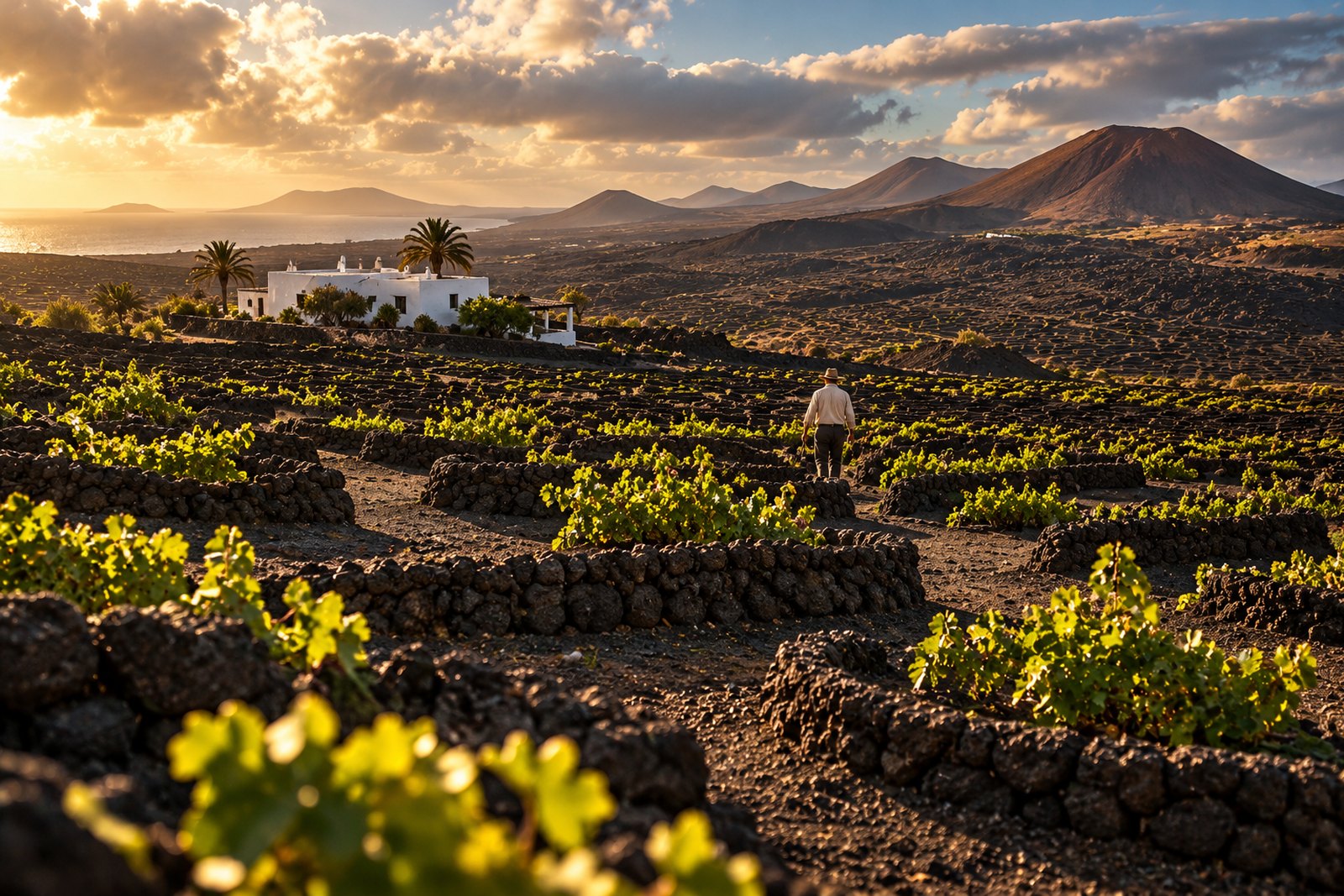
The turning point was the ash. When the volcanoes of the seventeen hundreds buried the best farmland under metres of lapilli, the farmers did not leave. They discovered that the black gravel, picón, keeps the little moisture the night air brings and shelters the plants from the wind. So they dug thousands of little hollows by hand, planted one vine or one sweet potato in each, and carried on. That is why the landscape looks like nowhere else and why the food tastes the way it does: small yields, deep flavour, nothing wasted.
Modern Lanzarote kept the old pantry and added restaurants, markets and a wine route. The result is a food scene that is much better than a small dry island has any right to have: honest fish houses by the harbours, family kitchens in the villages, guachinches that open when the new wine is ready, and a handful of chef-run places that treat local produce with real respect. You can eat seriously well here without dressing up, without spending a fortune and without booking three months ahead.
Farming on volcanic ash
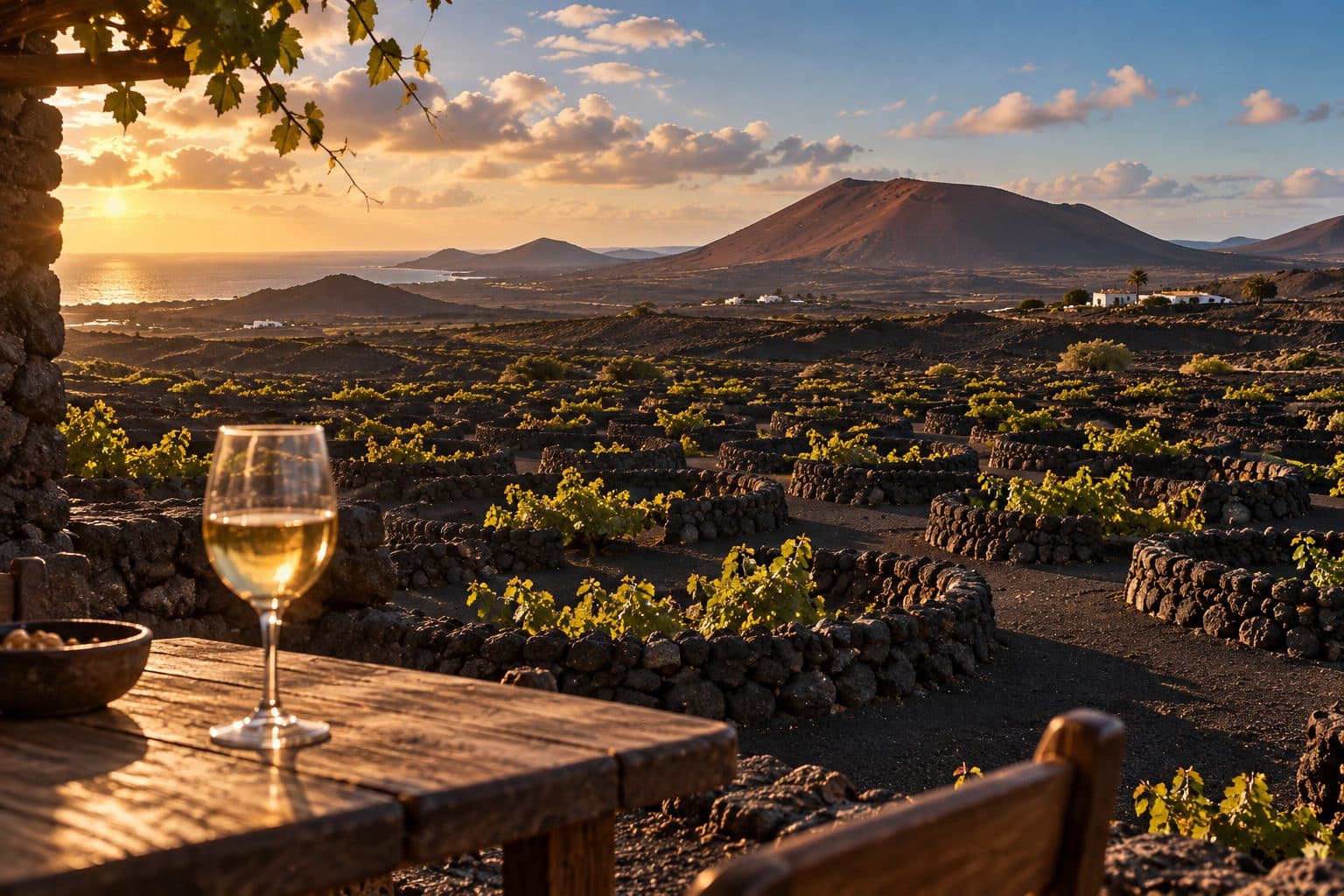
In La Geria and across the centre of the island, every vine lives in its own crater of black gravel, protected from the wind by a low curved wall of stone. Nothing is irrigated. The roots go deep, the yields are tiny, and the grapes come in small and concentrated, which is exactly what makes the local malvasía so aromatic. The same logic rules the vegetable gardens: aubergines, tomatoes and pumpkins grown in the ash are small, dense and full of taste. If a menu says the vegetables came from the island, order them.
Gofio, mojo and salt: the everyday pantry
Three things appear on almost every table. Gofio is roasted grain, milled into flour, the old survival food that islanders now whisk into sauces, desserts and ice cream. Mojo is the sauce: red with hot pepper for potatoes and meat, green with coriander and cumin for fish and cheese. And salt: the salt flats of Janubio still produce it, and it is the reason a simple boiled potato here tastes like a proper dish. Once you understand these three, you understand the food of Lanzarote.
The plates you should not leave without trying
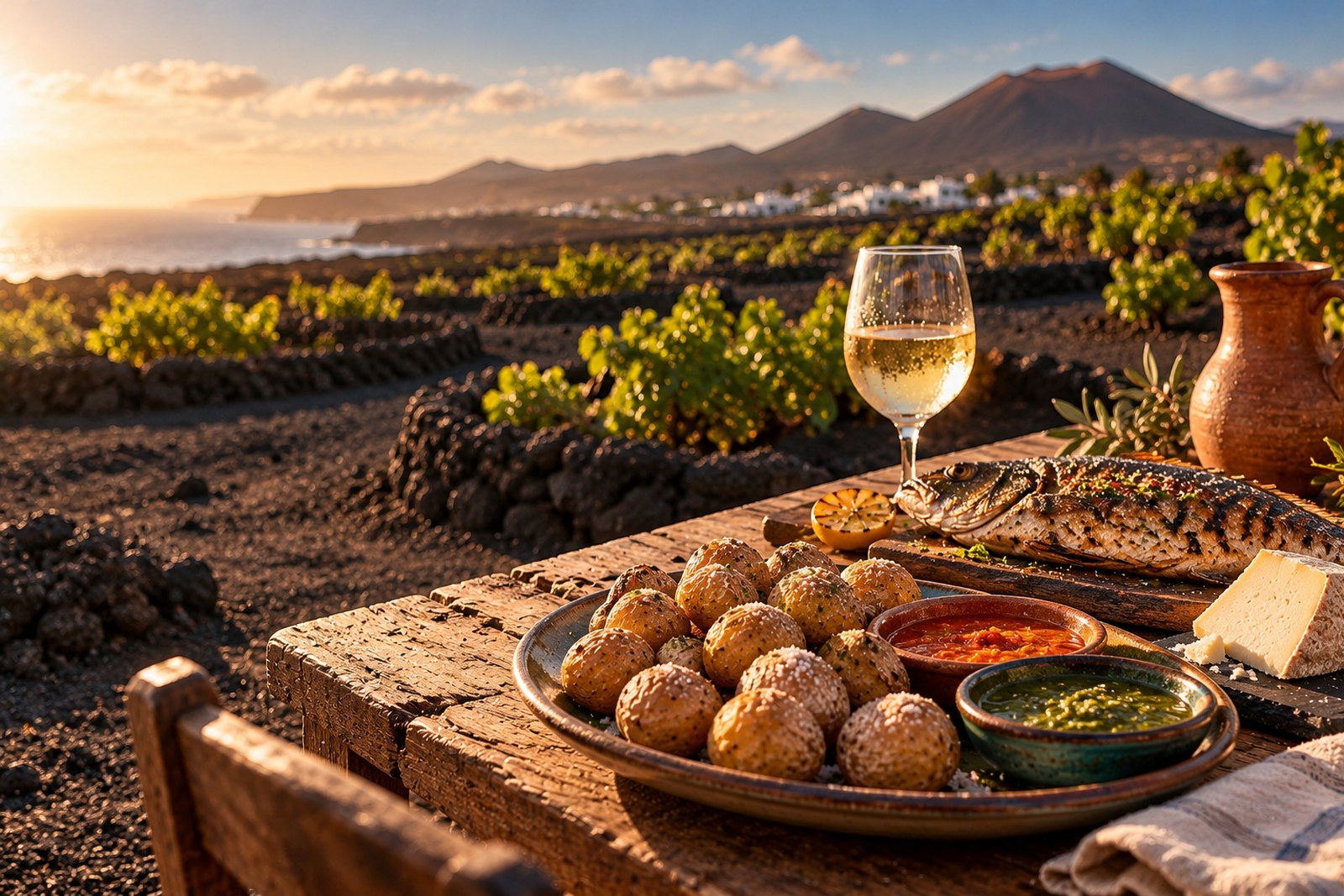
Start with the classics, because they are classics for a reason. Papas arrugadas are small potatoes boiled in very salty water until they wrinkle, served with both mojos and eaten with your fingers. Every family makes them differently and every restaurant claims theirs are the best. They come with almost everything: with fish, with cheese, with fried octopus, or on their own as a tapa with a cold beer while the sun goes down. Simple food done properly is the whole point of eating on this island.
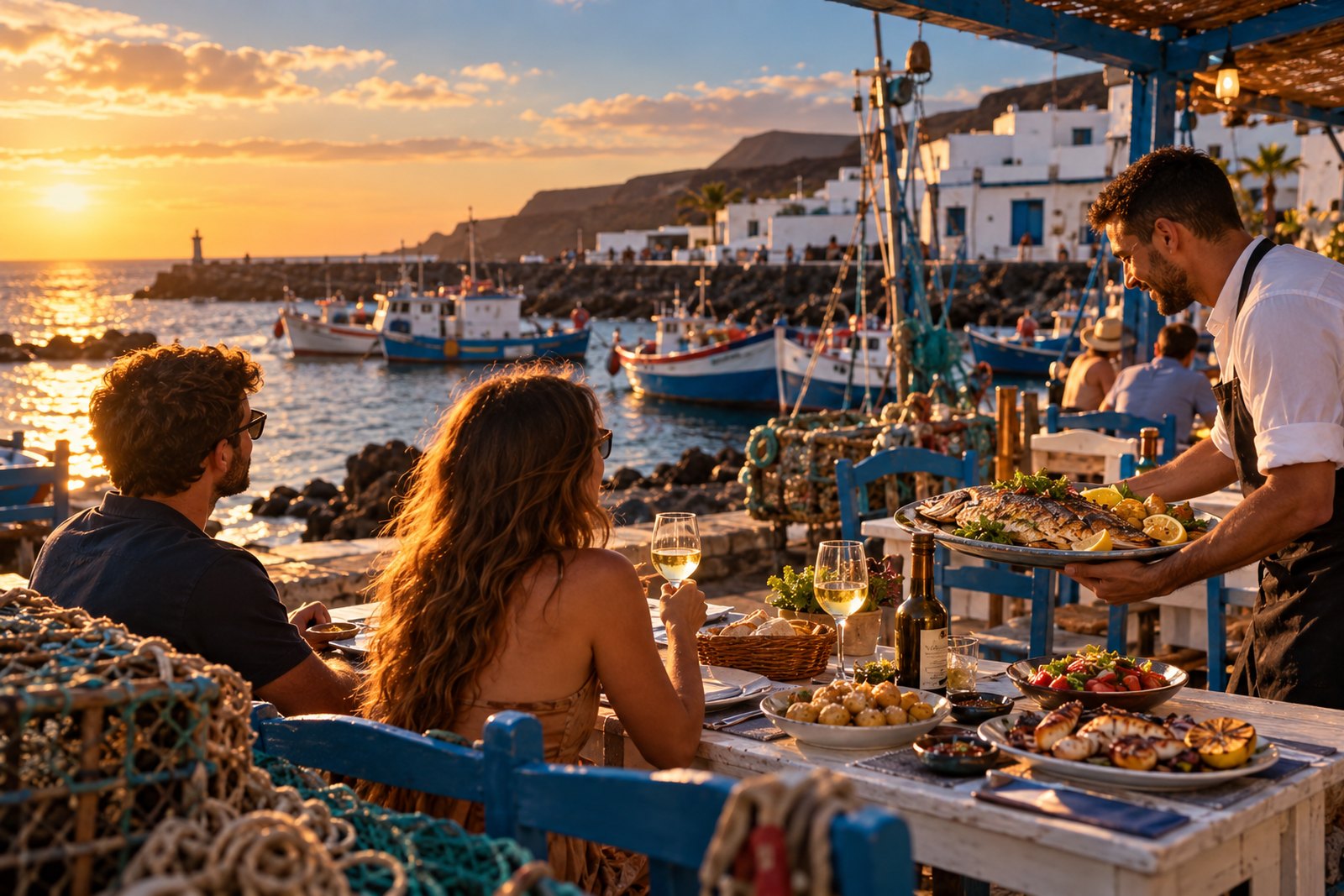
Then go to the sea, because that is where Lanzarote really sings. The fishing fleet works the rich Atlantic waters between here and Africa, and the day boats bring in whatever the ocean offers: parrotfish, cherne, sea bream, octopus, cuttlefish, limpets grilled on open fire, prawns from the south. In the harbour restaurants the fish is often displayed whole and priced by the kilo, so you choose it with your eyes. Grilled with coarse salt, a squeeze of lemon and nothing else is how the islanders eat it.
Meat and sweets deserve their moment too. Goat is the island's meat: roasted slowly, stewed with onions, or served as carne de fiesta at the village festivals, marinated in garlic, paprika and cumin. The cheese is mild, white and slightly elastic, the quesilla, eaten fresh or fried with mojo. For dessert look for bienmesabe, an almond and honey cream, or frangollo, a sweet gofio pudding with raisins and lemon, and finish with fruit that actually ripened in the sun: papaya, mango, bananas from the valleys of the north.
Papas arrugadas and mojo, the island on a plate
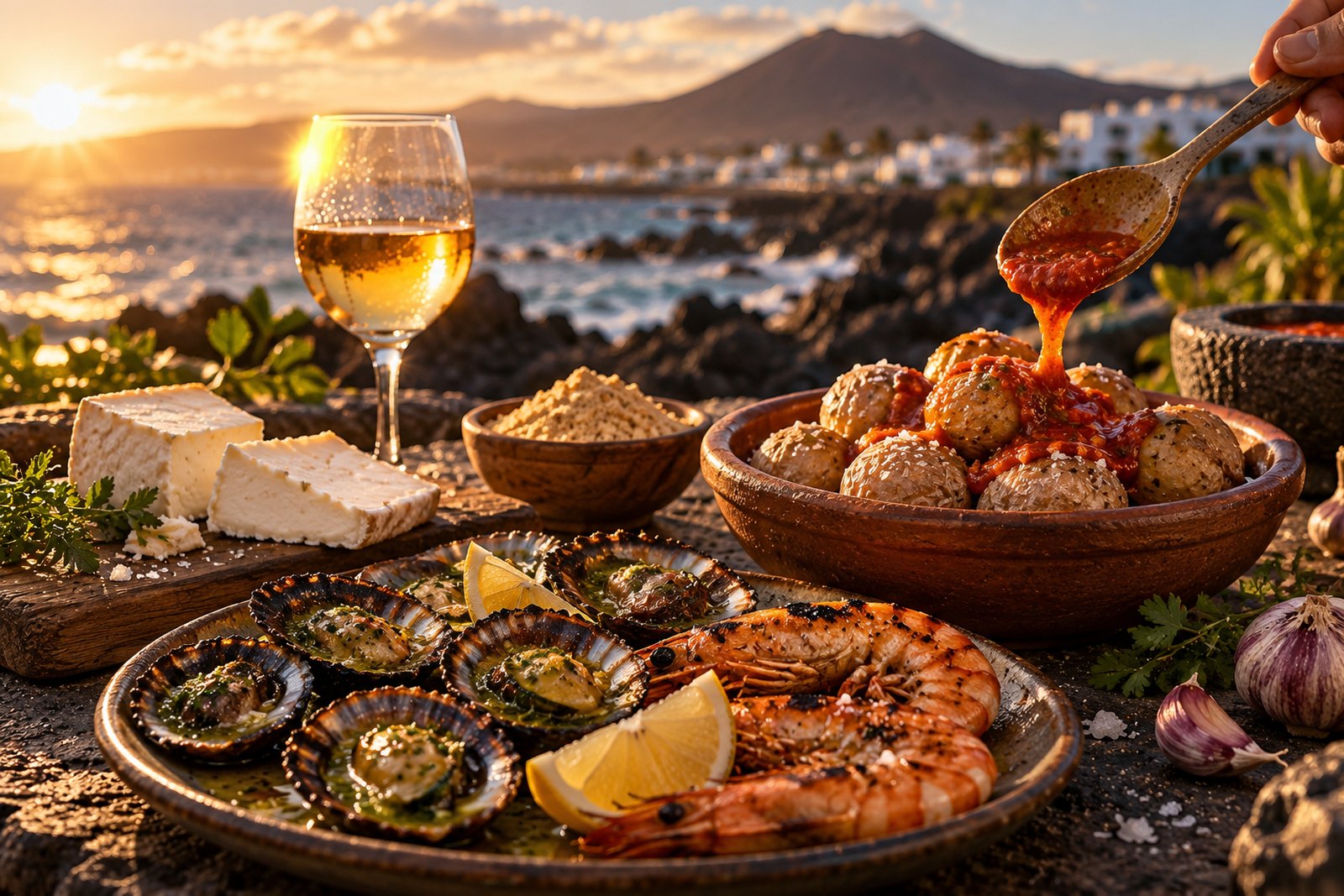
The trick is the water, not the potatoes. They are boiled in water as salty as the sea until it evaporates and leaves a thin crust of salt on the skin, which is why they look wrinkled and taste almost sweet inside. Red mojo is made with dried pepper, garlic, cumin and oil; green mojo with coriander and a little vinegar. If you want to eat them the local way, press each potato gently into the red mojo and eat it whole. Order them once and you will order them every day of your holiday.
Sancocho and what the boats bring in
Sancocho is the old fisherman's dish: salted fish, usually cherne or sama, boiled with sweet potato and served with mojo and gofio, a meal that fed people who worked the sea for days. You will still find it in the older kitchens around the island, and it is worth seeking out. For something lighter, ask for the fish of the day on the grill, or lapas, the limpets that cling to the lava rocks, served sizzling with green mojo and a wedge of lemon. They taste exactly like the coastline looks.
Quesilla, cabra and the sweeter side of the island
Goat cheese is everywhere and it is excellent: mild, creamy and made in tiny dairies you can visit in villages like Uga or Masdache. Fried quesilla with mojo is one of the great simple plates of the Canaries. Then go sweet, because Lanzarote desserts are old and good: bienmesabe, a thick almond cream that the islanders eat with a spoon; frangollo, sweet gofio with milk and raisins; quesadilla, a baked cheese pastry that has nothing to do with the Mexican thing. With a coffee, after a long lunch, on a quiet square. That is the island at its best.
Where to eat: beach shacks, fishing villages and island kitchens
Eating well here is mostly about picking the right kind of place. Along the resort seafronts you will find the international restaurants with big menus and picture boards, and some of them are fine, but the island's real cooking lives one street back, in the fishing villages and in the small places that open when they have something good to serve. My rule is simple: short menu, fish that looks like fish, locals at the other tables, and a owner who tells you what came in this morning.
In the south, Puerto del Carmen is the busiest table on the island and you can eat very well there if you know where to look. The old harbour end, behind the Avenida, has family fish houses where the catch is grilled over charcoal, and the back streets have tapas bars full of people speaking Spanish. This is also where my shop is, on Calle Roque Nublo 10, so if you are staying nearby, come and say hello and I will point you to my favourite table of the week. Around the corner from the restaurants you will find everything you need for a day out on the island.
The north is quieter and even more traditional. In Órzola the boats land the fish in front of the restaurants and in Caleta de Famara you eat with your feet almost in the sand, with the surfers coming out of the water behind you. Arrieta has a famous little fish place by the pier, Haría has terraces under the palm trees, and in the capital, Arrecife, the market area and the streets around the harbour serve the kind of lunch that islanders actually eat on a working day. Take your time over it: lunch is the main meal here, not an afterthought.
A guachinche is not a restaurant
A guachinche is a farmhouse that opens its doors when the new wine is ready and serves whatever is in the kitchen: a stew, some cheese, a plate of meat, the wine they made themselves. There are no printed menus, no cards and no ceremony, and the rules say they can only open for a limited time each year, which is why the best ones live by word of mouth. If someone tells you about one, follow the advice. It will be the most Canarian meal of your holiday.
Fish at the harbour, from north to south
For a guaranteed good fish lunch, put yourself where the boats come in. Órzola at the north end, where the ferries leave for La Graciosa; Caleta de Famara on the wild coast; Puerto Calero and Puerto del Carmen in the south; the small pier at Arrieta. Sit outside, order the fish of the day, and let the meal take the afternoon. If you want to get to the far north without thinking about the road, one of my excursions will drop you in the right village at the right time of day.
Markets, bodegas and how to plan a foodie day
Markets are the best way to taste the island in one morning. The Sunday market in Teguise fills the old capital with stalls of cheese, mojo, gofio, sweet potatoes, aloe products and papaya that was picked days before. Haría has its own market on Saturday under the palm trees, and around the island you will find small agricultural stalls where a farmer sells what his land produced this week, at prices that make you feel guilty. Go early, take cash, and buy the fruit you cannot pronounce.
Then there is the wine, which is Lanzarote's great surprise. On a La Geria wine tour you taste volcanic malvasía where it grows, straight out of the black ash, and you meet the people who dig those holes by hand every generation. The bodegas run from tiny family operations to the famous ones with views over the lava fields, and most of them will let you try before you buy. Pairing island wine with grilled fish is one of the genuinely great lunches of the Atlantic, and a wine tour in Lanzarote takes the driving out of it.
Planning a foodie day is easy. Pick up a car hire in Lanzarote, do the market before the heat, taste wine in La Geria, and finish with a long fish lunch by a harbour. If you'd rather not plan, my excursions in Lanzarote are built around exactly this rhythm: see the island, eat properly, be back for the sunset. If you want to work off lunch on two wheels, come see me at the shop in Puerto del Carmen or message me on WhatsApp at +34 603 27 93 06. Kids' bikes are 10€ a day, city bikes 15€, mountain bikes 20€ and electric bikes 30€, and the longer you keep them the less you pay per day.
The wine of La Geria, and how to taste it
The star grape is malvasía volcánica, which makes a dry white wine with a salty, mineral edge that locals drink with fish. There is also good rosé, a few interesting reds and some sweet wines for dessert. Tastings are relaxed and personal, and the etiquette is simple: ask questions, spit if you are driving, and never leave without walking out into the vines to see where the wine comes from. The landscape alone is worth the trip; the wine is the bonus.
Practical tips: times, habits and booking
Lanzarote eats late by northern standards: lunch around two in the afternoon, dinner from eight onwards, and the good places fill up quickly in season, so book dinner in advance and keep lunch flexible. Tapas and wine are perfectly normal at six in the evening; nobody will judge you. Fish is often sold by weight, so ask before you order, and remember that in the small village places cash is still king. Tipping is appreciated but never expected: rounding up or leaving a few coins is the local habit.
You might also be interested in: Wine tours in Lanzarote · The best excursions in Lanzarote · Car hire in Lanzarote · Boat hire & boat trips in Lanzarote · Wine tours in La Geria · Rentals & excursions in Puerto del Carmen · Lanzarote for families · Lanzarote for couples
Every adventure with Zack follows the same promise: no stress, no surprises, just the right experience at the right moment. Before you even arrive, he is already thinking about the wind, the light, the perfect hour and the little details that turn a holiday into a story you will tell for years. Lanzarote Food Guide: Eating Like a Local on a Volcanic Island is not just a booking: it is the beginning of your Lanzarote story.
How it works: from the first message to your best memory
1. Choose your adventure
Scroll through this page and feel what fits you: Lanzarote Food Guide: Eating Like a Local on a Volcanic Island, or maybe something different? Every traveller is unique, and Zack knows it. Look at the photos, read the tips, and if you are not sure, that is the best moment to write: telling him who you are and what you love is enough, and he will build the perfect day around it.
2. Book in one message
No forms, no call centres: one WhatsApp message and you are in. Zack replies with availability, the honest price and the plan for the day, including what to bring and when to start. The more days or people, the better the price — and if your plans change, you are talking to a real person who adapts.
3. Live the experience
This is where Lanzarote shows off. The island unfolds in colours you did not expect: black lava, red volcanoes, turquoise water and light that makes everything look like a film. With Lanzarote Food Guide: Eating Like a Local on a Volcanic Island you enjoy it your way, with a local team watching over every detail so that your only job is to have the time of your life.
4. Back home, happy
The tan fades, the memories do not. You go home with a phone full of photos, a heart full of stories and that feeling of having discovered a place rather than just visited it. Friends will ask for your itinerary: that is when you know you chose the right adventures.
5. Tell the world
If Zack and his team made your holiday special, the best thank you is a review on Google Maps: sixty seconds that help other travellers find the same magic, and make a local team very proud. Share your story, your photos and your tips — and become part of the Zack Lanzarote family.
Frequently asked questions
What food is Lanzarote famous for?
The icons are papas arrugadas with red and green mojo, fresh grilled fish like parrotfish and sea bream, goat cheese, octopus, and the volcanic malvasía wine of La Geria. For dessert, try bienmesabe or frangollo, and eat the tropical fruit grown on the island.
Where do locals eat in Puerto del Carmen?
Locals eat around the old harbour and in the back streets behind the Avenida, where family fish houses and tapas bars serve the catch of the day. Ask me when you pass by my shop on Calle Roque Nublo 10 and I will send you to my favourite table this week.
Can I visit the vineyards of La Geria?
Yes, and you should. The bodegas welcome visitors for tastings among the vines, and a guided wine tour means nobody has to drive. Combine it with the volcanoes and a long lunch and you have the perfect day on the island.
Is eating out in Lanzarote expensive?
It does not have to be. A tapas lunch with wine costs little, fish restaurants are usually good value, and the smartest trick is the menu del día in the village places. The splurge is a big grilled fish by the harbour, and it is worth every cent.
You may also like
Wine tours in Lanzarote
Discover more →
The best excursions in Lanzarote
Discover more →
Car hire in Lanzarote
Discover more →
Boat hire & boat trips in Lanzarote
Discover more →Punta Mujeres: The Fishing Village of Natural Pools
Discover more →San Ginés Festival: Arrecife's Biggest Summer Party
Discover more →Lanzarote Food Guide: Eating Like a Local on a Volcanic Island
Discover more →Puerto del Rosario City Guide: The Real Capital of Fuerteventura
Discover more →Costa Teguise City Guide: Beaches, Wind and the Pueblo Marinero
Discover more →Playa Blanca City Guide: Lanzarote's Sunny Southern Harbour
Discover more →Yaiza and El Golfo: Lanzarote's Green Lagoon and Prettiest Village
Discover more →Puerto del Carmen Neighbourhoods: Centro, Los Pocillos and Matagorda
Discover more →Day Trip from Lanzarote to Corralejo, Fuerteventura
Discover more →Las Palmas de Gran Canaria and the Canary Islands Region
Discover more →Famara and Caleta de Famara: the Wild Side of Lanzarote
Discover more →Arrecife City Guide: the Capital of Lanzarote Beyond the Guidebooks
Discover more →Lanzarote in Autumn: Weather, Beaches and the Best Things to Do
Discover more →Teguise City Guide: the Old Capital and the Sunday Market
Discover more →La Graciosa: How to Visit the Eighth Canary Island
Discover more →Haría and the North of Lanzarote: Valleys, Cliffs and Palm Groves
Discover more →Tinajo and the Volcanic North of Lanzarote
Discover more →Lanzarote in Winter: Weather, Festivals and the Best Things to Do
Discover more →San Bartolomé City Guide: The Agricultural Heart of Lanzarote
Discover more →Lanzarote in Spring: Weather, Beaches and the Best Things to Do
Discover more →Órzola and the Far North: the Fishing Village at the End of the Road
Discover more →Lanzarote in Summer: Long Days, Warm Sea and the Island at Its Best
Discover more →Puerto Calero City Guide: The Marina and the Quiet Side of Lanzarote
Discover more →Maspalomas City Guide: The Dunes and the Sunny South of Gran Canaria
Discover more →Christmas and New Year in Lanzarote: Winter Sun, Fiestas and Local Traditions
Discover more →Betancuria and the Heart of Fuerteventura: the White Town in the Green Valley
Discover more →La Geria and the Volcanic Vineyards of Lanzarote
Discover more →Ironman Lanzarote 2027: the Race, the Route and Race Week
Discover more →Timanfaya National Park: How to Visit the Fire Mountains of Lanzarote
Discover more →The César Manrique Route: The Man Who Built Modern Lanzarote
Discover more →Hiking in Lanzarote: The Best Walks on a Volcanic Island
Discover more →Papagayo Beaches: The Wild Southern Coves of Lanzarote
Discover more →Sea Safety in Lanzarote: How to Read the Water Like a Local
Discover more →Lanzarote Markets: The Complete Weekly Market Guide
Discover more →Carnival in Lanzarote: The Wildest Week on the Island
Discover more →Easter in Lanzarote: Semana Santa and Spring on the Island
Discover more →Day Trip to Jandía and Morro Jable from Lanzarote
Discover more →Romería de los Dolores: Lanzarote's Biggest Pilgrimage
Discover more →El Cotillo and the Wild North-West Coast of Fuerteventura
Discover more →Stargazing in Lanzarote: Dark Skies Over the Volcanoes
Discover more →La Santa: the Surf Village on Lanzarote's Wild West Coast
Discover more →Playa Honda and Matagorda: The Quiet Coast Next to the Airport
Discover more →Fiestas del Carmen: Lanzarote Honours the Sea
Discover more →Tías and the Inland Villages of Southern Lanzarote
Discover more →Guatiza and the Cactus Garden: The Green Jewel of Lanzarote
Discover more →Isla de Lobos: Day Trip to the Secret Island near Lanzarote
Discover more →Lanzarote Food Guide: Eating Like a Local on a Volcanic Island: related services and areas of Lanzarote
🔗 Services in Lanzarote
📍 Areas and towns of Lanzarote

Meet Zack — your adventurous guide in Lanzarote
Founder · adventurer at heart
Elegant on the outside, adventurer at heart. Zack is the one who shows up with a big smile and the perfect plan for your day. Fun, easy-going and always ready for one more adventure, he knows every corner of Lanzarote — and he tailors every experience to your needs. Tell him who you are travelling with and what you love: he takes care of the rest, with the best advice and a joke ready to go.
Your adventure starts with a smile. — Zack
Come and visit us at the shop!
You'll find Zack Bike Lanzarote in Puerto del Carmen — pass by for a coffee, honest advice and the right plan for your days on the island.
🏠 Calle Roque Nublo 10, Puerto del Carmen, Lanzarote, Spain