
San Bartolomé City Guide: The Agricultural Heart of Lanzarote
Everybody crosses San Bartolomé and almost nobody stops. The road from the airport runs straight through it, past white houses and onion fields, and the holiday crowds roll on towards the beaches. That is a mistake. This is the working heart of Lanzarote: the greenest valley on the island, a monument raised to the farmers who pulled food out of volcanic ash, and the quietest museum you will find anywhere here. Give the town half a day and it changes how you see the rest of the island.
⚡ Quick summary before you plan your days in Lanzarote
- What to know firstEverybody crosses San Bartolomé and almost nobody stops.
- Who it is forSan Bartolomé sits where the island comes together.
- Main optionsThe white town in the middle of the island · Monumento al Campesino: a tribute to the farmers · Aloe, vines and the green valley · Exploring from San Bartolomé
- Duration, prices and detailsIs San Bartolomé worth visiting in Lanzarote? Very much so, and it takes less time than you think. The Monumento al Campesino, the Tanit museum and the green valley can be enjoyed in a relaxed half day, and the town shows you the island…
- How to bookBook on WhatsApp · +34 603 27 93 06


📷 Gallery
🧭 Zack's 3-click Lanzarote experience planner
💬 Send my plan to Zack on WhatsApp
Because a tour should feel like travelling with a friend: Zack designs the route around your rhythm, your curiosity and your camera roll — and changes it whenever you wish.
The white town in the middle of the island
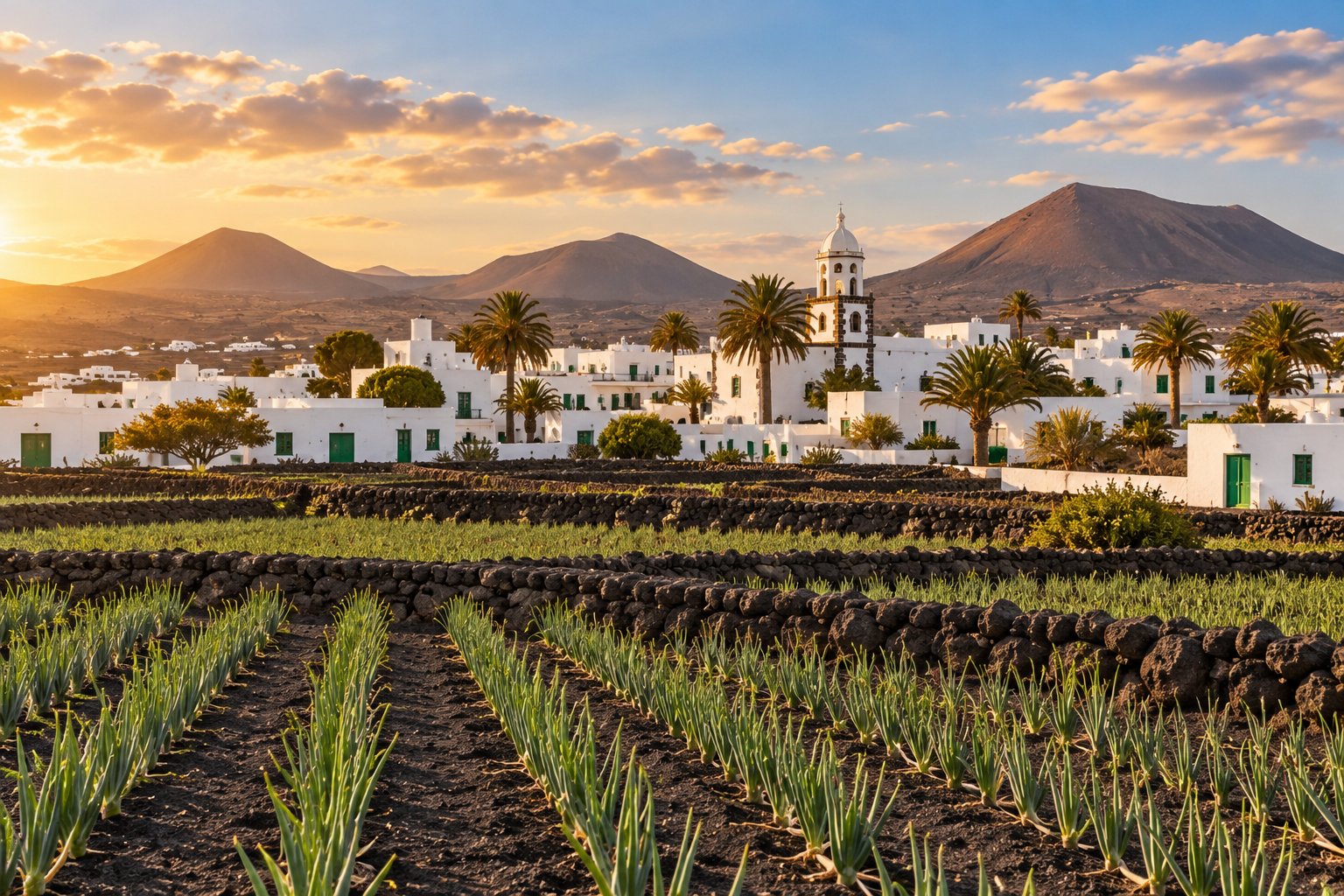
San Bartolomé sits where the island comes together. Ten minutes from the airport, ten from the old capital of Teguise and a short drive from the lava fields of the west, it has been the crossroads of Lanzarote for centuries, and the town still lives like it: unhurried, practical, more interested in the harvest than in the postcard. White houses line the avenues, the church tower marks the centre, and the fields around town are the greenest thing between the volcanoes and the sea. This is where Lanzarote grows its onions, its sweet potatoes and most of its patience.
What I like about San Bartolomé is that nothing here was built for visitors, and it shows in the best way. Mornings start with tractors and bakery queues, not excursion buses. The main square belongs to the old men on benches and the kids on bikes, and the bars serve coffee strong enough to make the next stop optional. Come on a weekday, walk three blocks in any direction and you see the island as the people who live here see it. Then go and look at the monument that says thank you for all of it.
Plaza de León y Castillo and the old town
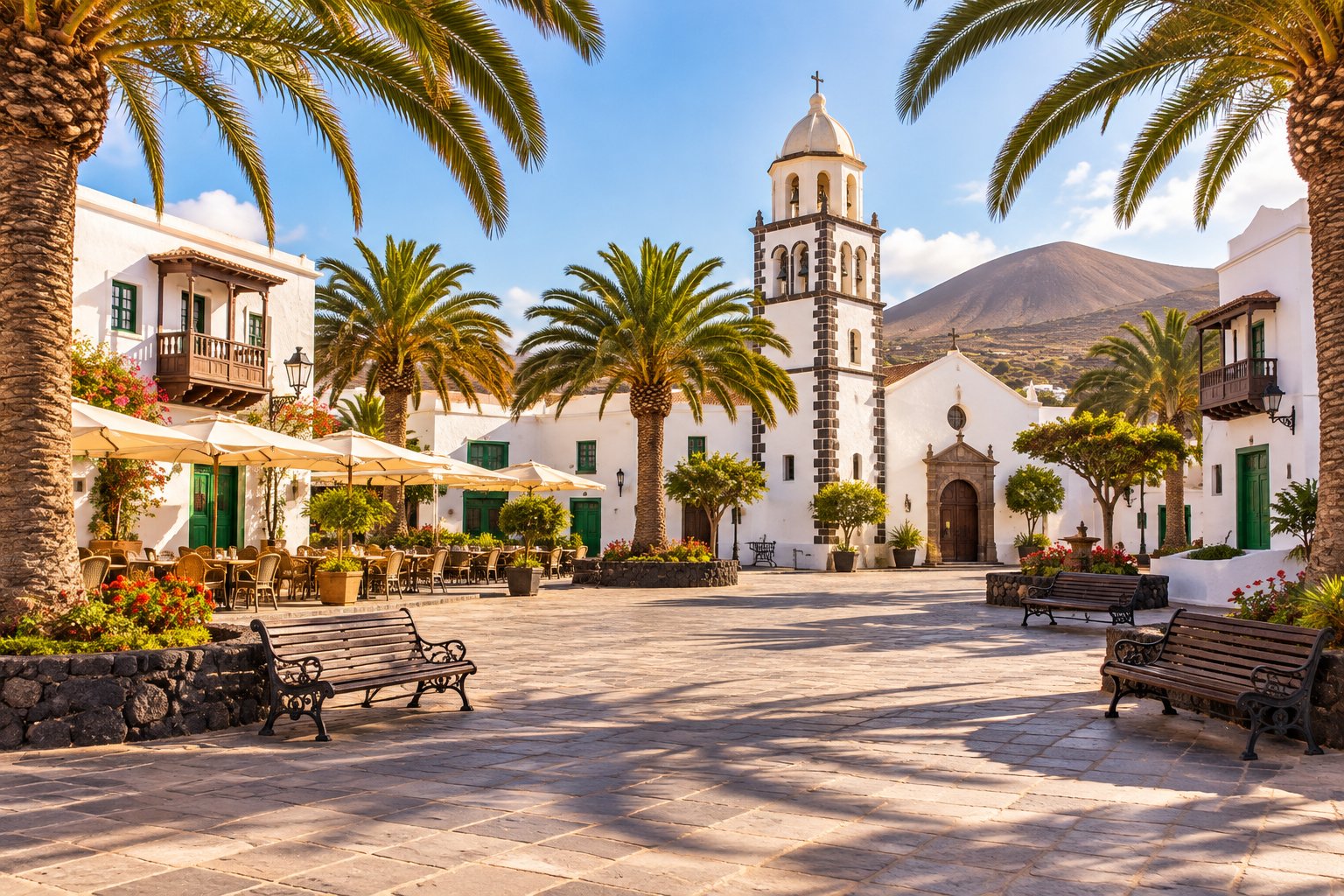
The plaza is the natural starting point: a broad, palm-shaded square with the parish church on one side, the town hall on the other and terraces that do a very good barraquito. Around it the old quarter keeps its low white houses, green doors and small courtyards where peppers dry in the sun. Nothing takes long to see here and nothing should. Order a coffee, watch the town go about its morning, then wander the lanes behind the square, where the real San Bartolomé is being lived rather than photographed. It is the perfect pause between two big sights.
Casa Amarilla and the Tanit ethnographic museum
Halfway between the square and the fields stands the Casa Amarilla, a traditional island house restored with the touch of César Manrique and home to the Tanit ethnographic museum. Inside, the tools of Canarian farming tell the story this valley is famous for: hand ploughs, gofio mills, water cisterns, woven palm and the slow genius of growing food in ash. There is a rebuilt cave house and a patio full of plants, and the whole visit takes less than an hour. It is the best possible preparation for everything waiting in the fields outside.
The windmills and the winter fields
On the ridges around town, old stone windmills once ground the island's gofio, the roasted grain flour that kept Lanzarote alive through lean centuries. Some have been restored and all of them frame the view. Below them the fields follow the winter rain: onions, potatoes, sweet potatoes and vines pushing through black volcanic grit, laid out in a mosaic of green and grey that changes every month. In late August the town celebrates its patron saint with music, processions and the kind of small-town fiesta visitors remember longer than any beach club.
Monumento al Campesino: a tribute to the farmers
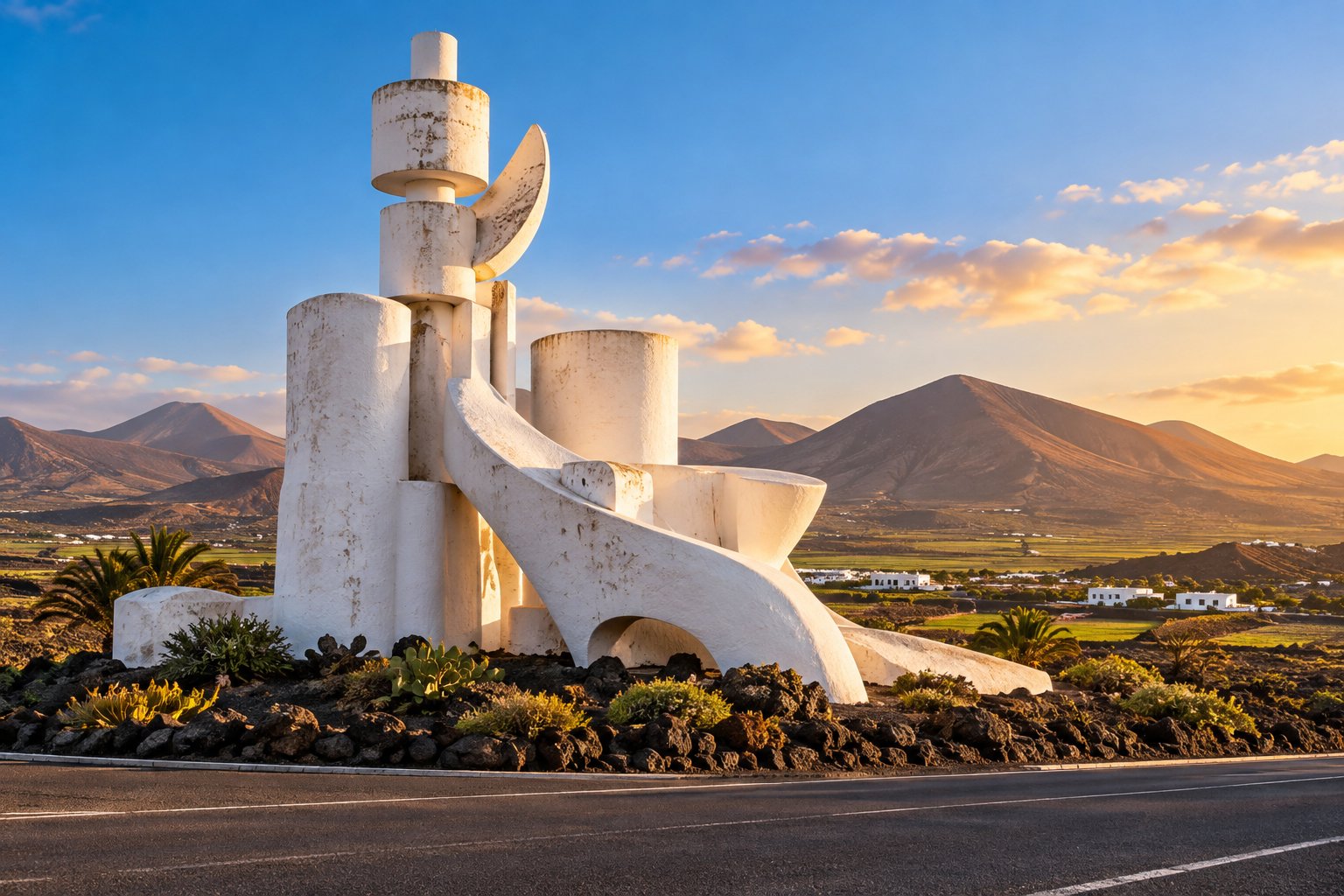
Right at the crossroads of the island stands one of César Manrique's most moving works: the Monumento al Campesino, a great white sculpture built from old water tanks and farm materials, raised in the seventies in honour of the peasant farmers of Lanzarote. It marks almost the exact geographical centre of the island, and if you are driving anywhere you pass it sooner or later. Do more than pass. Stop, walk around it and read the message underneath: the real miracle of Lanzarote is not its volcanoes but the people who farmed them.
Behind the monument spreads the centre that gives it context. The Museo del Campesino digs its halls underground to leave the old landscape untouched, and inside, film, sound and a floor full of tools walk you through the impossible agriculture of this island: how ash became soil, how stone walls trap the wind, how a single drop of water is worth more than gold. There is no rush here and no crowd most days. It is one of those places that quietly rearranges the rest of your holiday.
The monument at the centre of the island
The sculpture itself is worth the stop at any hour, but the light in the late afternoon turns it into the best photo of your trip. From the platform beside it you look across the valley to the volcano line, and on clear days all the way to the northern cliffs. Local talk puts the monument on the exact centre of Lanzarote; true or not, everything on the island does seem to radiate from here. It is free, it is quick, and it is the sort of landmark that makes sense of the whole map.
Inside the Museo del Campesino
The museum is laid out like a walk through a farmer's year. Rooms built into the earth hold the old tools, the seed selection, the stone-lined water cisterns and the camels that once did the heavy work. Sound and video bring the harvests back to life, and children can touch almost everything, which is why families stay longer than they planned. Ask at the desk about the short guided tour when it runs: local guides add the stories the labels leave out, and they are good stories. Two rainy hours well spent.
Craft workshops and the old farmstead
Around the museum courtyard, artisans keep island crafts alive: aloe worked into creams and gels, leather stitched by hand, pottery thrown on old wheels. You can watch them work, ask questions without being sold anything and buy straight from the people who made it, which is my favourite kind of shopping. The farmstead buildings around the square show how a Lanzarote family once lived with its animals, its grain and its water under one roof. Give the whole complex two hours, more if you stay for lunch.
Aloe, vines and the green valley
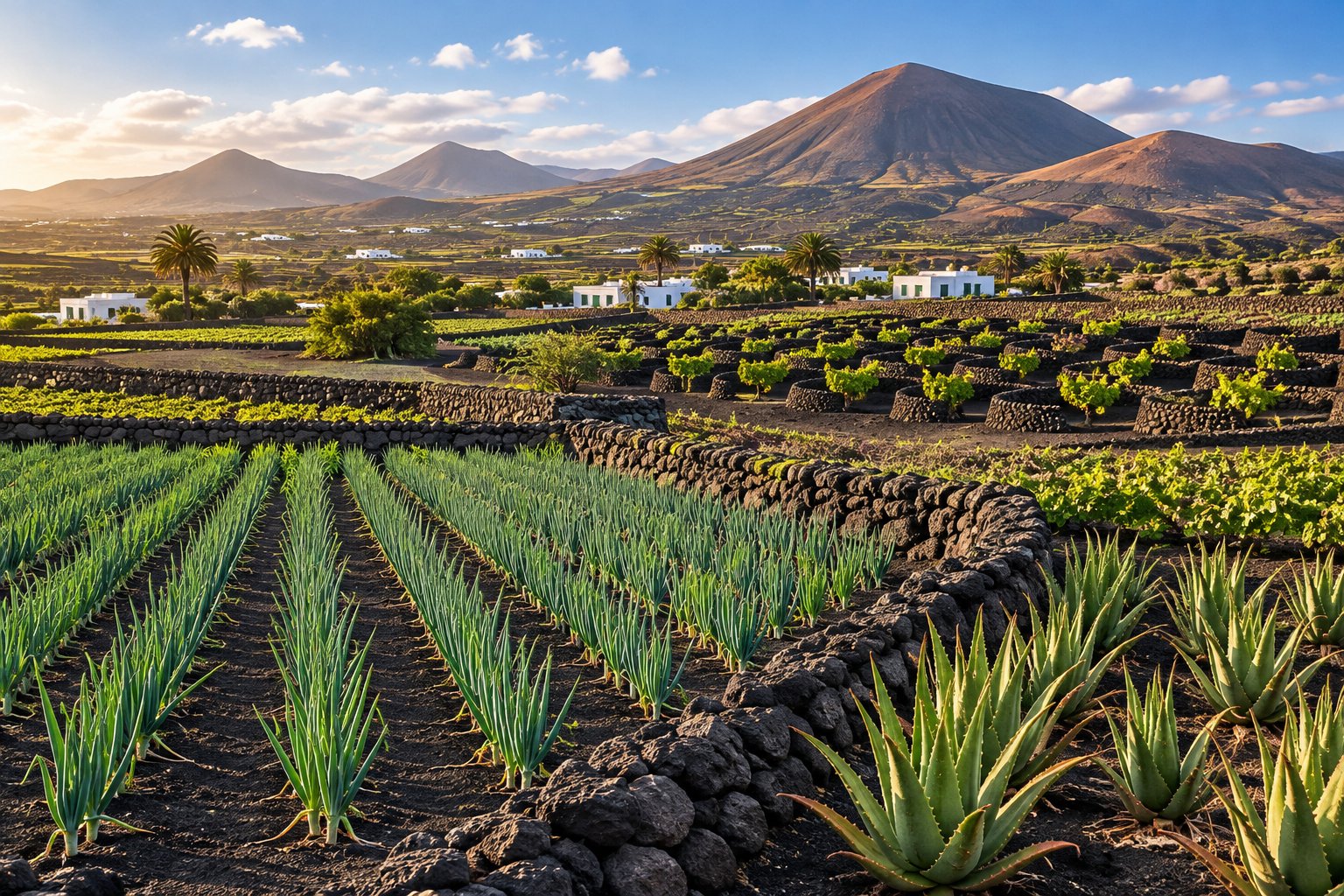
The valley around San Bartolomé is Lanzarote's breadbasket, and the way it is farmed is one of the island's best stories. After the eighteenth-century eruptions buried the fields in ash, the farmers discovered that the black grit, the picón, holds the night's moisture like a sponge. So they kept it, dug every plant its own little pit, ringed each field with stone walls against the wind, and turned a lava wasteland into the greenest valley in the Canaries. Driving through in winter, with the ash fields striped in green, is one of my favourite things to show people.
Aloe vera rules the margins of the fields, and the valley produces some of the purest gel in Europe. Vineyards take over to the west, where La Geria begins within minutes of town, and the whole area smells of tomato leaves, warm stone and sea wind by turns. This is slow agriculture on volcanic soil and the food that comes out of it tastes like it. If your holiday has been all beaches so far, an afternoon between the aloe farms and the bodegas is the best recalibration available.
Aloe vera and island crafts
Nearly every field edge here carries aloe, and plenty of small farms open their doors to visitors. What you want is pure inner-leaf gel made here rather than shipped in, and the growers are usually happy to show how the plant is cut and processed. The big plantations spread towards Guatiza and the north, but the small producers around San Bartolomé are where the interesting conversations happen. Buy a leaf, buy a tube, and read the label the way you would anywhere: the island has no shortage of imported aloe dressed up as local.
Wine country next door in La Geria
Five minutes west of town the ground turns to pure ash and the vines appear, each one planted in a crater and sheltered by a hand-built stone crescent. This is La Geria, the strangest and most beautiful wine region I know, and the malvasía volcánica it produces is crisp, salty and grown nowhere else on earth. The bodegas along the road offer tastings and tours; prices change and I never invent numbers, so ask me before you go and I will tell you what is fair. Better still, let someone else do the driving.
What to eat and where
Order what the valley grew. The onions of San Bartolomé are famous across the Canaries, the sweet potatoes are the best on the island and the local goat cheese disappears faster than I can bring it home. Simple kitchens around the plaza and along the main road grill fish, stew rabbit in salmorejo and pour wine from vines you passed ten minutes earlier. Lunch is serious here, served early and slow. If gofio mousse is on the dessert list, take it: the roasted grain flavour is strange for ten seconds and unforgettable after that.
Exploring from San Bartolomé
Central as it is, San Bartolomé makes a smart base for the whole island. With car hire in Lanzarote the volcanoes of the west, the beaches of the south and the green valleys of the north are all inside an hour, and the wine country starts at the edge of town: my wine tours in Lanzarote run through the bodegas of La Geria without anyone worrying about the drive home. For a stress-free day that folds in Timanfaya, the green lagoon and a proper lunch, book my excursions in Lanzarote, and everything about this corner of the island is collected in my page about La Geria.
Distances are kind from here. Arrecife and the airport are about ten minutes east, Teguise and its Sunday market ten minutes north, the Timanfaya turn-off twenty minutes west and Puerto del Carmen a quarter of an hour south. You can sleep in the quiet of the valley and still put the whole island in your week. Public buses connect the town with Arrecife and the coast, but the best of this landscape — the ash fields, the bodegas, the back roads — is only honest on your own schedule.
Timanfaya, El Golfo and the volcanic west
From San Bartolomé the road west crosses the vineyards and drops straight into the fire country: Timanfaya, where the ground still steams; El Golfo, where a half-sunk crater holds a lagoon the colour of emeralds; and Los Hervideros, where the Atlantic pounds black lava caves until the whole coast roars. One good day covers it with stops for grilled fish and a walk on the black coast. Take water and take your time, and if the queue at Timanfaya looks long, remember everything after it is free of queues.
The north: Haría, Órzola and La Graciosa
North of town the island turns green again. The road climbs through the valley of a thousand palms to Haría, drops past the cliffs of Famara and ends at Órzola, the little fishing village where the ferry leaves for La Graciosa, the eighth Canary island and the only one with no proper roads. It makes a long, wonderful day from San Bartolomé, and I have lost count of the guests who called it the highlight of their holiday. Go early, take the first boat and let the day decide the rest.
Getting around and my shop
Buses link San Bartolomé with Arrecife and the coast, but this island rewards having your own wheels. My shop, Zack Bike Lanzarote in Calle Roque Nublo 10, Puerto del Carmen, hires kids bikes at 10€ per day, city and trekking bikes at 15€, mountain bikes at 20€ and electric bikes at 30€, with better rates the longer you keep them. For the valley roads and the volcanoes I would take a car; for La Geria at sunset, an electric bike is the best decision of your day. Delivery and anything else you need is on request, so just ask.
You might also be interested in: Car hire in Lanzarote · Wine tours in Lanzarote · Bike hire in Lanzarote · The best excursions in Lanzarote · Rentals & excursions in San Bartolomé · Wine tours in La Geria · Lanzarote for families · Lanzarote for couples
Every adventure with Zack follows the same promise: no stress, no surprises, just the right experience at the right moment. Before you even arrive, he is already thinking about the wind, the light, the perfect hour and the little details that turn a holiday into a story you will tell for years. San Bartolomé City Guide: The Agricultural Heart of Lanzarote is not just a booking: it is the beginning of your Lanzarote story.
How it works: from the first message to your best memory
1. Choose your adventure
Scroll through this page and feel what fits you: San Bartolomé City Guide: The Agricultural Heart of Lanzarote, or maybe something different? Every traveller is unique, and Zack knows it. Look at the photos, read the tips, and if you are not sure, that is the best moment to write: telling him who you are and what you love is enough, and he will build the perfect day around it.
2. Book in one message
No forms, no call centres: one WhatsApp message and you are in. Zack replies with availability, the honest price and the plan for the day, including what to bring and when to start. The more days or people, the better the price — and if your plans change, you are talking to a real person who adapts.
3. Live the experience
This is where Lanzarote shows off. The island unfolds in colours you did not expect: black lava, red volcanoes, turquoise water and light that makes everything look like a film. With San Bartolomé City Guide: The Agricultural Heart of Lanzarote you enjoy it your way, with a local team watching over every detail so that your only job is to have the time of your life.
4. Back home, happy
The tan fades, the memories do not. You go home with a phone full of photos, a heart full of stories and that feeling of having discovered a place rather than just visited it. Friends will ask for your itinerary: that is when you know you chose the right adventures.
5. Tell the world
If Zack and his team made your holiday special, the best thank you is a review on Google Maps: sixty seconds that help other travellers find the same magic, and make a local team very proud. Share your story, your photos and your tips — and become part of the Zack Lanzarote family.
Frequently asked questions
Is San Bartolomé worth visiting in Lanzarote?
Very much so, and it takes less time than you think. The Monumento al Campesino, the Tanit museum and the green valley can be enjoyed in a relaxed half day, and the town shows you the island behind the postcards. It is also perfectly placed: Teguise, Arrecife, La Geria and the volcanoes are all within a short drive.
What is the Monumento al Campesino?
It is a white sculpture built by César Manrique from old water tanks and farm materials, standing near the geographical centre of Lanzarote as a tribute to the peasant farmers who made the island productive. Behind it, the underground Museo del Campesino tells their story with tools, film and a full-size farmstead.
How much time do I need in San Bartolomé?
A half day covers the town, the museum and a walk in the fields; add lunch and a bodega in La Geria and it becomes one of the best days of your holiday. The town is also a quiet, central base if you prefer sleeping away from the resorts.
How do I get to San Bartolomé without a car?
Public buses run from Arrecife to San Bartolomé, and Arrecife is connected to every resort. To explore the valley, La Geria and the volcanoes properly, a rental car pays for itself. Send me a message at +34 603 27 93 06 and I will sort out transport and a route that fits your days.
You may also like

Car hire in Lanzarote
Discover more →
Wine tours in Lanzarote
Discover more →
Bike hire in Lanzarote
Discover more →
The best excursions in Lanzarote
Discover more →Punta Mujeres: The Fishing Village of Natural Pools
Discover more →San Ginés Festival: Arrecife's Biggest Summer Party
Discover more →Lanzarote Food Guide: Eating Like a Local on a Volcanic Island
Discover more →Puerto del Rosario City Guide: The Real Capital of Fuerteventura
Discover more →Costa Teguise City Guide: Beaches, Wind and the Pueblo Marinero
Discover more →Playa Blanca City Guide: Lanzarote's Sunny Southern Harbour
Discover more →Yaiza and El Golfo: Lanzarote's Green Lagoon and Prettiest Village
Discover more →Puerto del Carmen Neighbourhoods: Centro, Los Pocillos and Matagorda
Discover more →Day Trip from Lanzarote to Corralejo, Fuerteventura
Discover more →Las Palmas de Gran Canaria and the Canary Islands Region
Discover more →Famara and Caleta de Famara: the Wild Side of Lanzarote
Discover more →Arrecife City Guide: the Capital of Lanzarote Beyond the Guidebooks
Discover more →Lanzarote in Autumn: Weather, Beaches and the Best Things to Do
Discover more →Teguise City Guide: the Old Capital and the Sunday Market
Discover more →La Graciosa: How to Visit the Eighth Canary Island
Discover more →Haría and the North of Lanzarote: Valleys, Cliffs and Palm Groves
Discover more →Tinajo and the Volcanic North of Lanzarote
Discover more →Lanzarote in Winter: Weather, Festivals and the Best Things to Do
Discover more →San Bartolomé City Guide: The Agricultural Heart of Lanzarote
Discover more →Lanzarote in Spring: Weather, Beaches and the Best Things to Do
Discover more →Órzola and the Far North: the Fishing Village at the End of the Road
Discover more →Lanzarote in Summer: Long Days, Warm Sea and the Island at Its Best
Discover more →Puerto Calero City Guide: The Marina and the Quiet Side of Lanzarote
Discover more →Maspalomas City Guide: The Dunes and the Sunny South of Gran Canaria
Discover more →Christmas and New Year in Lanzarote: Winter Sun, Fiestas and Local Traditions
Discover more →Betancuria and the Heart of Fuerteventura: the White Town in the Green Valley
Discover more →La Geria and the Volcanic Vineyards of Lanzarote
Discover more →Ironman Lanzarote 2027: the Race, the Route and Race Week
Discover more →Timanfaya National Park: How to Visit the Fire Mountains of Lanzarote
Discover more →The César Manrique Route: The Man Who Built Modern Lanzarote
Discover more →Hiking in Lanzarote: The Best Walks on a Volcanic Island
Discover more →Papagayo Beaches: The Wild Southern Coves of Lanzarote
Discover more →Sea Safety in Lanzarote: How to Read the Water Like a Local
Discover more →Lanzarote Markets: The Complete Weekly Market Guide
Discover more →Carnival in Lanzarote: The Wildest Week on the Island
Discover more →Easter in Lanzarote: Semana Santa and Spring on the Island
Discover more →Day Trip to Jandía and Morro Jable from Lanzarote
Discover more →Romería de los Dolores: Lanzarote's Biggest Pilgrimage
Discover more →El Cotillo and the Wild North-West Coast of Fuerteventura
Discover more →Stargazing in Lanzarote: Dark Skies Over the Volcanoes
Discover more →La Santa: the Surf Village on Lanzarote's Wild West Coast
Discover more →Playa Honda and Matagorda: The Quiet Coast Next to the Airport
Discover more →Fiestas del Carmen: Lanzarote Honours the Sea
Discover more →Tías and the Inland Villages of Southern Lanzarote
Discover more →Guatiza and the Cactus Garden: The Green Jewel of Lanzarote
Discover more →Isla de Lobos: Day Trip to the Secret Island near Lanzarote
Discover more →San Bartolomé City Guide: The Agricultural Heart of Lanzarote: related services and areas of Lanzarote
🔗 Services in Lanzarote
📍 Areas and towns of Lanzarote

Meet Zack — your adventurous guide in Lanzarote
Founder · adventurer at heart
Elegant on the outside, adventurer at heart. Zack is the one who shows up with a big smile and the perfect plan for your day. Fun, easy-going and always ready for one more adventure, he knows every corner of Lanzarote — and he tailors every experience to your needs. Tell him who you are travelling with and what you love: he takes care of the rest, with the best advice and a joke ready to go.
Your adventure starts with a smile. — Zack
Come and visit us at the shop!
You'll find Zack Bike Lanzarote in Puerto del Carmen — pass by for a coffee, honest advice and the right plan for your days on the island.
🏠 Calle Roque Nublo 10, Puerto del Carmen, Lanzarote, Spain