
Maspalomas City Guide: The Dunes and the Sunny South of Gran Canaria
Maspalomas is the place where Gran Canaria stops being an island and turns into a postcard: hundreds of hectares of golden dunes rolling straight into the Atlantic, an old lighthouse standing guard, and a beach that runs for kilometres behind it. It is the sunniest corner of the second largest Canary Island and a short hop from Lanzarote, which makes it the easiest big adventure in the archipelago. Here is my honest guide to the dunes, the beaches and the evenings.
⚡ Quick summary before you plan your days in Lanzarote
- What to know firstMaspalomas is the place where Gran Canaria stops being an island and turns into a postcard: hundreds of hectares of golden dunes rolling straight into the Atlantic, an old lighthouse standing guard, and a beach that runs for kilometres…
- Who it is forNothing prepares you for the size of the dunes.
- Main optionsThe dunes: where the sand meets the Atlantic · The beaches from San Agustín to Meloneras · Getting to Maspalomas from Lanzarote · Eating out and the Meloneras evenings
- Duration, prices and detailsIs Maspalomas worth a day trip from Lanzarote? As a pure day trip it is long, because of the flight or ferry, so I would do it as a two or three night escape instead. That said, an early flight gets you onto the dunes before lunch, and a…
- How to bookBook on WhatsApp · +34 603 27 93 06


📷 Gallery
🧭 Zack's 3-click Lanzarote experience planner
💬 Send my plan to Zack on WhatsApp
Because a tour should feel like travelling with a friend: Zack designs the route around your rhythm, your curiosity and your camera roll — and changes it whenever you wish.
The dunes: where the sand meets the Atlantic
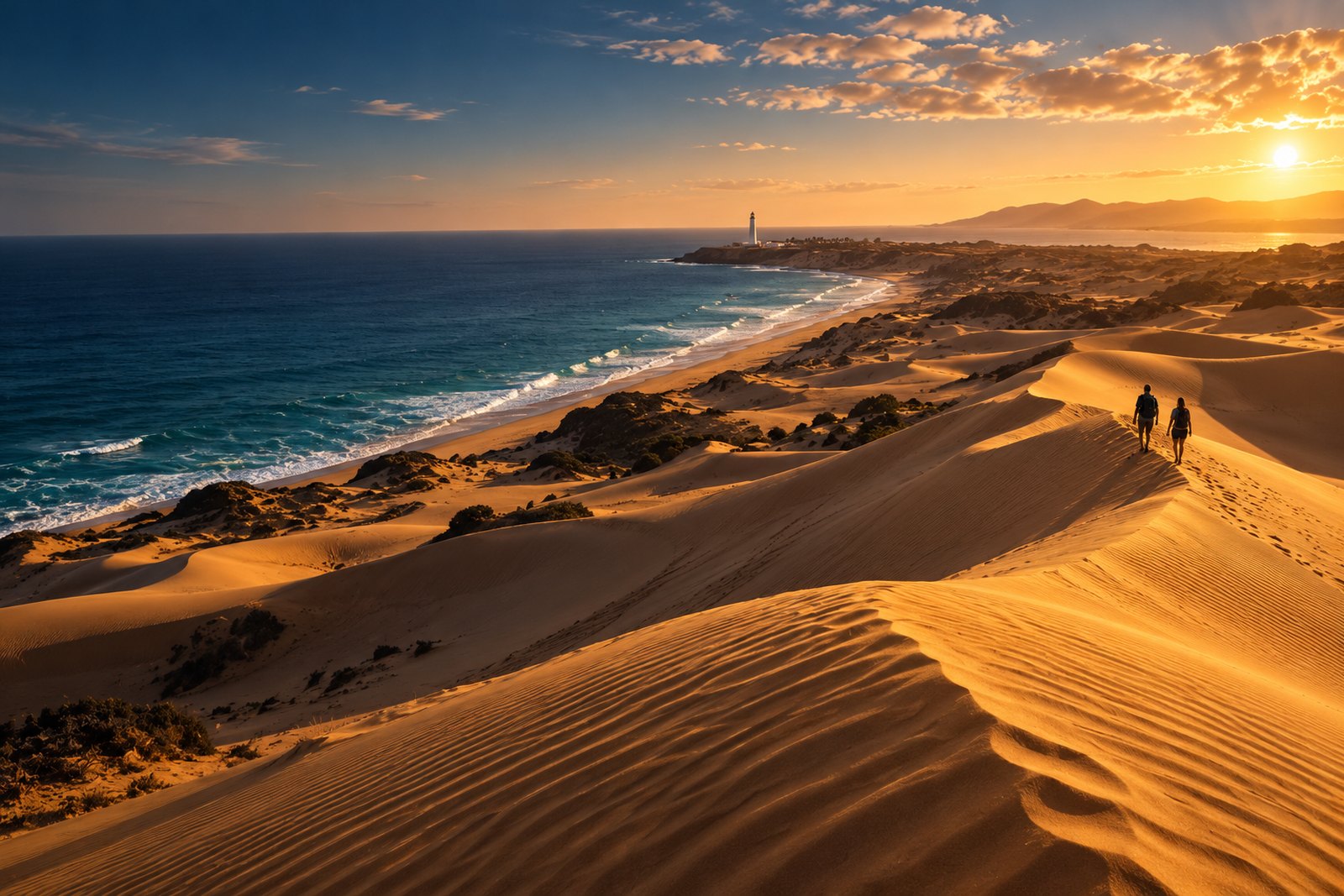
Nothing prepares you for the size of the dunes. You walk ten minutes inland from the beach and suddenly there is desert: ridge after ridge of warm ochre sand, shaped every night by the trade winds, with the ocean flashing blue between the slopes. The wind moves the whole field a little every year, which is why the place feels alive rather than museum-like. Walk barefoot at sunrise and you will have whole valleys of sand to yourself, with nothing but your own footprints and the sound of the surf behind you.
The dunes sit at the southern tip of Gran Canaria, between the resorts of Playa del Inglés and Meloneras, and they are the reason most people come south at all. This is a natural reserve, so the rules matter: stick to the marked paths, take your rubbish with you and leave the sand where it is. Do that and the place gives back tenfold. I bring friends here whenever the Lanzarote wind gets too enthusiastic, because down here the desert and the ocean argue about who is more beautiful and you win either way.
A protected desert of sand and shells
The dunes are not Saharan dust dumped on the island, whatever the postcards say. Most of the sand is crushed shell and marine sediment, ground fine by the Atlantic and pushed ashore over thousands of years, with a top-up of Saharan dust whenever the calima blows in. Together they built a living system of mobile dunes, slacks and a small lagoon, all protected as a natural reserve. The vegetation is tough and tiny, the lizards are fast and confident, and everything you find here has learned to survive salt, wind and sun.
Camels, sunrises and the best light
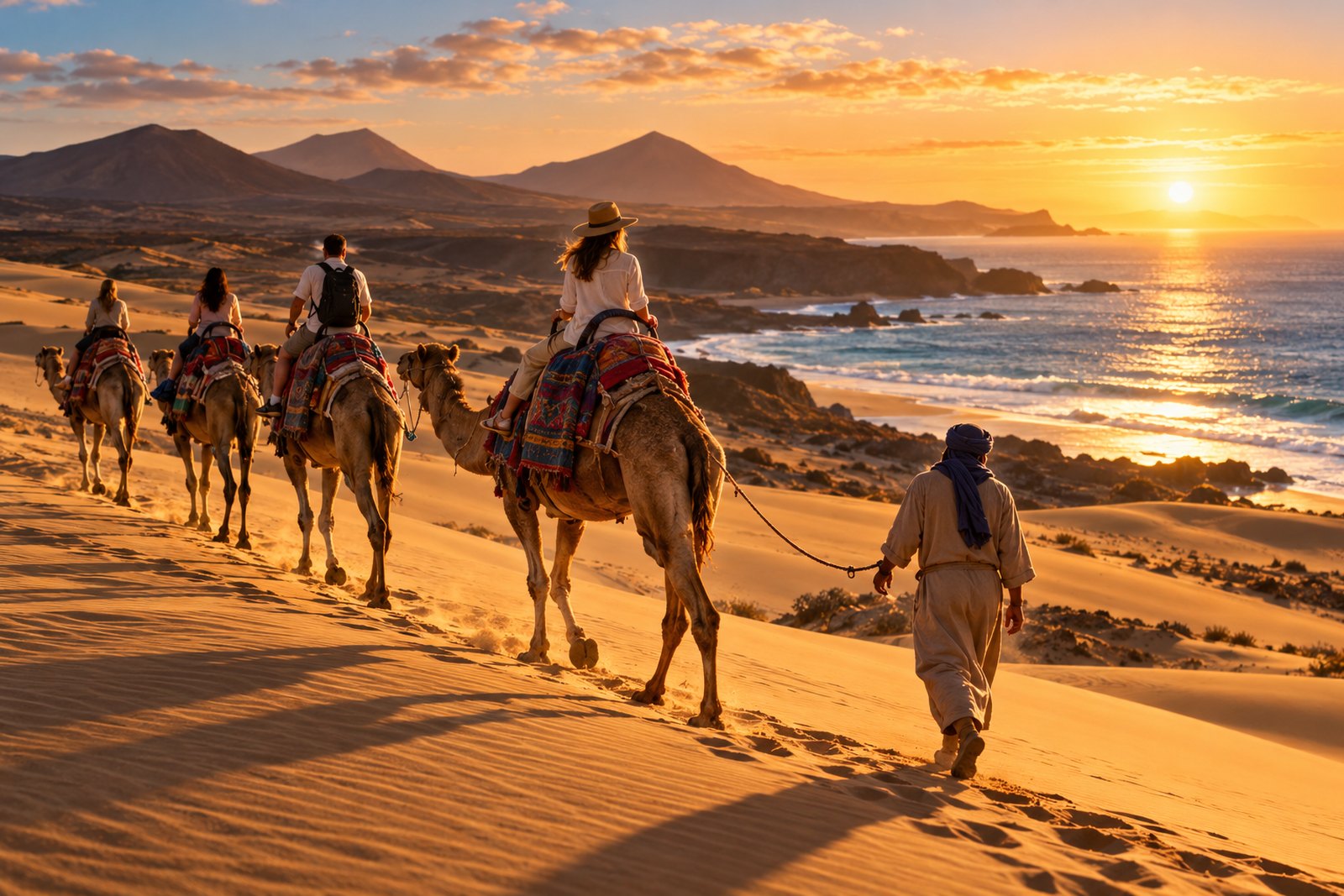
The classic Maspalomas photo is the camel caravan crossing the dunes, and yes, it is as good as it looks: a line of camels with woven saddles stepping over the ridges while the low sun draws long shadows across the sand. The rides leave near the lighthouse end and take about an hour, and if the desert gets under your skin there are also the camel rides in Lanzarote waiting for you at home. If you prefer your sand without transport, come at sunrise or just before sunset, when the ridges turn gold and the wind usually drops. Midday in summer is beautiful but brutal: no shade, hot sand and a very honest sun.
The lagoon and the birdlife
Behind the beach the sea pushes a shallow lagoon into the dunes, and this is the quiet heart of the reserve. Brackish water, reeds and a constant traffic of birds: herons, plovers, sandpipers and, in winter, migratory species that stop here between Africa and northern Europe. There is a boardwalk and viewing points, and the whole loop takes half an hour at birdwatching speed. Bring binoculars if you have them, keep your voice down and you will be surprised how close the birds let you get.
The beaches from San Agustín to Meloneras
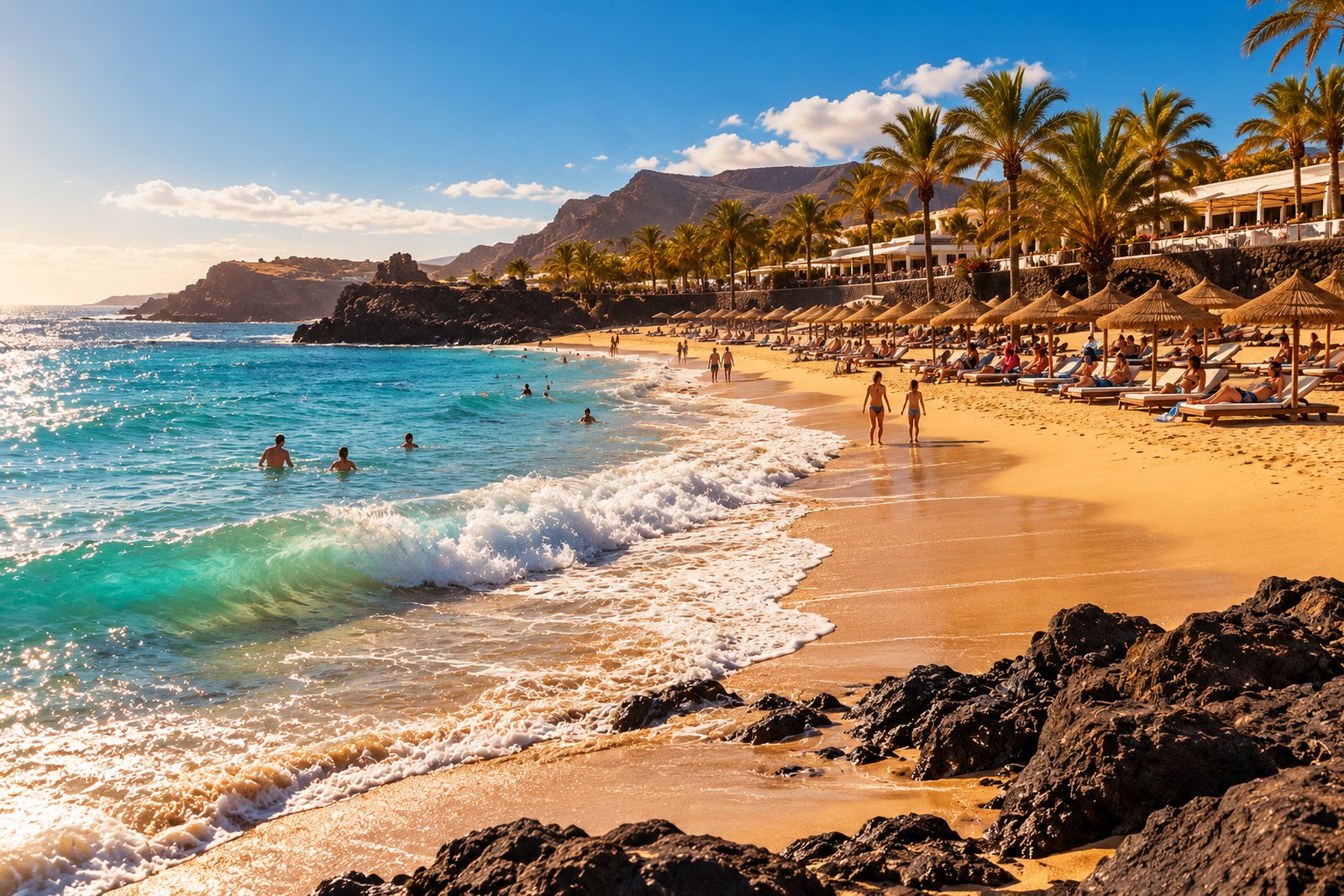
The southern coast is one long beach broken into neighbourhoods, and choosing your stretch is the most important decision of the day. At the lighthouse end you get Playa de Maspalomas: wide, golden, backed by dunes and the wildest of the lot. Walk east and the sand becomes Playa del Inglés, busy, young and loud, with sunbeds, music and beach bars. Keep going and you reach San Agustín, calmer and more sheltered, and finally Meloneras, with its promenade, smart hotels and sunset terraces. Four moods, one coastline, all walkable if you are patient.
What they share is the Atlantic, and the Atlantic here is honest. Summer days are usually calm and swimmable, winter brings bigger swell that is brilliant for bodyboarding and for watching, less brilliant for small children. There are lifeguards on the main stretches, flags tell you the story and the currents run along the shore, so never swim alone or against the signs. When in doubt, swim near the lifeguard station and keep the day easy. The ocean is the best thing about this coast, but it is still the ocean.
Playa de Maspalomas and the wild end
This is my favourite stretch: the sand runs right into the dunes, there is space even in August, and the lighthouse behind you gives every photo a sense of place. The far eastern end is the nudist section, the middle is families and walkers, and the western end by the lighthouse is the easiest for facilities and access. The water deepens quickly, which strong swimmers love and parents should respect. Walk fifteen minutes east and the crowd thins out to almost nobody, which is the whole point of a desert beach.
Playa del Inglés: the loud one
Playa del Inglés is the famous one: kilometres of sand, a beachfront promenade, sunbeds by the hundred and a resort that never really goes to sleep behind it. It is the right choice if you want music, beach volleyball, cocktails and people-watching, and the wrong choice if you came for silence. The sand is excellent and the swimming is easy, and in the evening the whole strip turns into one long open-air bar. I am too old for the clubs and still end up here twice a trip, for the sheer human fireworks of it all.
San Agustín, Meloneras and the calm side
San Agustín is where the south goes quiet: a sheltered beach of dark golden sand, a low promenade, family hotels and the sort of café where the owner learns your name. Meloneras, next door, is the polished version: smart terraces, a seafront boulevard and the best sunsets on the island, straight down the line to the lighthouse. Both are excellent bases if you want your mornings slow and your evenings tidy. Between the two you find the quieter entrances to the dunes, which makes sunrise walks a matter of minutes.
Getting to Maspalomas from Lanzarote
Getting here is easier than it looks on the map. The fastest way is the short flight from Lanzarote to Gran Canaria, forty-five minutes in the air and you land in a different world: greener, bigger, louder. From the airport the motorway runs straight south and drops you at the dunes in about half an hour. The romantic way is the ferry from Arrecife to Las Palmas, a slow crossing that trades speed for ocean, dolphins and the pleasure of arriving by sea. Whichever you choose, go for at least two nights, because one day here is a teaser, not a visit.
Planning the island-hopping is the part I help with most. With car hire in Lanzarote you can drive to the ferry or the airport on your own schedule, and once you are in the south of Gran Canaria a car turns the dunes, Puerto de Mogán and the mountain villages into easy half-day loops. If you would rather leave the logistics to someone else, my excursions in Lanzarote are the perfect warm-up before you hop islands, and everything I offer in the south of Lanzarote is collected on my page about Puerto del Carmen.
The morning flight and the motorway south
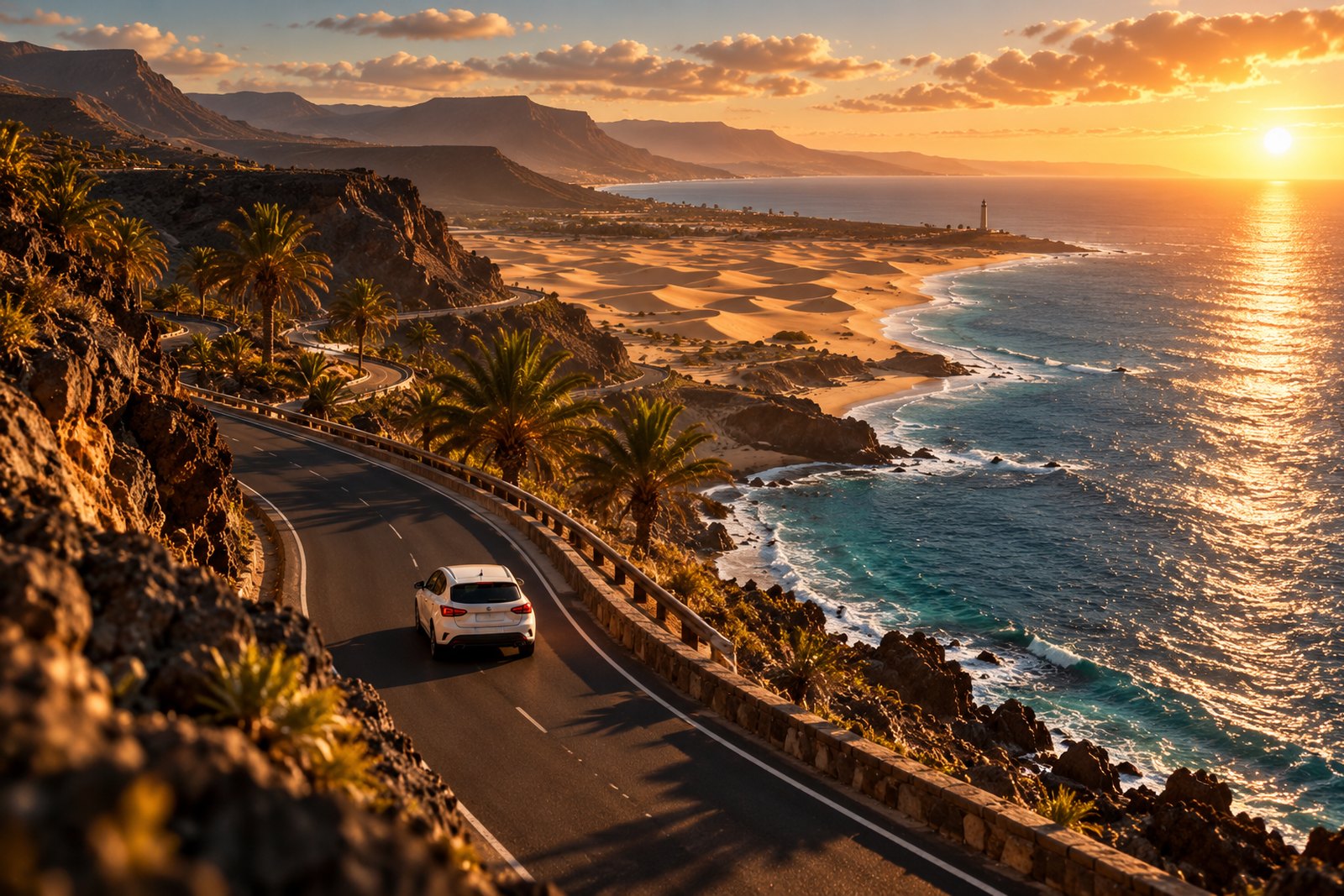
Book the early flight and you can be walking the dunes before lunch. The airport of Gran Canaria sits on the east coast, the GC-1 motorway runs south from the terminal, and Maspalomas, Meloneras and San Agustín are all signed off the same road. Traffic is easy outside rush hour, parking in the resorts is straightforward if a little pricey, and the drive gives you a first look at the green interior of the island. Take water and sunscreen: the south is significantly drier and hotter than Lanzarote.
Ferries and the slow road
The ferry from Arrecife to Las Palmas takes most of the day and is worth it if you like ships more than airports: decks, wake, dolphins if you are lucky, and the skyline of the capital arriving in the afternoon light. From the port of Las Palmas it is under an hour down the motorway to the dunes. There is also the northern route via Corralejo and the short ferry to Fuerteventura, which turns the trip into a two-island road adventure. Slower, wilder, and my personal favourite way to travel between the islands.
Getting around and my shop
Buses and taxis cover the south coast well, but a car unlocks the mountains and the west, and the distances are bigger than they look. Sort your Lanzarote wheels at my shop, Zack Bike Lanzarote in Calle Roque Nublo 10, Puerto del Carmen: kids bikes at 10€ per day, city and trekking bikes at 15€, mountain bikes at 20€ and electric bikes at 30€, with better rates the longer you keep them. Everything else, from child seats to route advice to delivery, is on request, so just ask. Message me on WhatsApp at +34 603 27 93 06 and I will help you plan the whole hop.
Eating out and the Meloneras evenings
The south eats well and eats late. Fish rules the coast: grilled cherne, fried calamares, octopus with mojo and prawns when the boats come in, all served with papas arrugadas and the two local sauces, red and green. Behind the promenade you find Canarian kitchens where locals eat: stews, goat cheese, wrinkled potatoes and generous plates meant for sharing. Then there is the tropical side of Gran Canaria: avocado, mango, banana and the rum that comes out of the island's distilleries, sweet and dangerous in equal measure.
Evenings in Meloneras are the reward for a long day in the sun. The boulevard lights up, the terraces fill, the Atlantic goes copper and then black, and the lighthouse starts blinking over the dunes. It is polished and calm, the kind of place where dinner becomes a three-hour event and nobody checks their watch. If you want grittier and cheaper, head to the local restaurants inland at San Fernando or the fish shacks around Arguineguín. If you want pure postcard, walk to the lighthouse for sunset and eat afterwards with sand still in your shoes.
Fish, mojo and the southern kitchens
Order whatever the chalkboard says is fresh and you cannot go wrong. The southern kitchens are strong on fish and shellfish, on Canarian cheeses and on the little plates that arrive before you have decided what to eat. A good rule: one fish to share, one local cheese, potatoes with both mojos, and a bottle of something from the islands. Service is friendly and unhurried, portions are honest, and the bill in the local places is half of what you pay on the boulevard. Two dinners in each style and you have understood the south.
Puerto de Mogán and the coast road
Half an hour west of the dunes, Puerto de Mogán is the pretty fishing harbour everyone photographs: white houses, flowers over the walls, canals of blue water and a beach sheltered from the wind. It is an easy half-day trip, with a Friday market that fills the marina and swimming that is gentler than anywhere on the open coast. On the way back take the old coast road through the fishing villages, stop where the parking looks busy with local cars, and order what the table next to you is having. That is the whole strategy.
When to go and what to pack
There is no bad season here: winters are warm and green, summers are hot with a cooling trade wind in the afternoon, and spring and autumn are the sweet spots for walking the dunes without cooking. Pack light layers, a hat that actually shades your face, sunscreen with respect written on it, and shoes you can take off quickly at the sand's edge. A jumper for the evening and a light rain jacket for the odd winter shower and you are ready for everything this coast does.
You might also be interested in: Camel rides in Lanzarote · Car hire in Lanzarote · The best excursions in Lanzarote · Tours around Lanzarote · Rentals & excursions in Puerto del Carmen · Rentals & excursions in Arrecife · Lanzarote for families · Lanzarote for couples
Every adventure with Zack follows the same promise: no stress, no surprises, just the right experience at the right moment. Before you even arrive, he is already thinking about the wind, the light, the perfect hour and the little details that turn a holiday into a story you will tell for years. Maspalomas City Guide: The Dunes and the Sunny South of Gran Canaria is not just a booking: it is the beginning of your Lanzarote story.
How it works: from the first message to your best memory
1. Choose your adventure
Scroll through this page and feel what fits you: Maspalomas City Guide: The Dunes and the Sunny South of Gran Canaria, or maybe something different? Every traveller is unique, and Zack knows it. Look at the photos, read the tips, and if you are not sure, that is the best moment to write: telling him who you are and what you love is enough, and he will build the perfect day around it.
2. Book in one message
No forms, no call centres: one WhatsApp message and you are in. Zack replies with availability, the honest price and the plan for the day, including what to bring and when to start. The more days or people, the better the price — and if your plans change, you are talking to a real person who adapts.
3. Live the experience
This is where Lanzarote shows off. The island unfolds in colours you did not expect: black lava, red volcanoes, turquoise water and light that makes everything look like a film. With Maspalomas City Guide: The Dunes and the Sunny South of Gran Canaria you enjoy it your way, with a local team watching over every detail so that your only job is to have the time of your life.
4. Back home, happy
The tan fades, the memories do not. You go home with a phone full of photos, a heart full of stories and that feeling of having discovered a place rather than just visited it. Friends will ask for your itinerary: that is when you know you chose the right adventures.
5. Tell the world
If Zack and his team made your holiday special, the best thank you is a review on Google Maps: sixty seconds that help other travellers find the same magic, and make a local team very proud. Share your story, your photos and your tips — and become part of the Zack Lanzarote family.
Frequently asked questions
Is Maspalomas worth a day trip from Lanzarote?
As a pure day trip it is long, because of the flight or ferry, so I would do it as a two or three night escape instead. That said, an early flight gets you onto the dunes before lunch, and a full day is enough for the desert, a swim and a sunset dinner. If you only have one day, go for it and sleep on the plane back; if you have a week, give the south of Gran Canaria two nights and thank me later.
Can you walk on the dunes of Maspalomas?
Yes, and you should, but the dunes are a protected natural reserve, so walk on the marked paths, do not take sand home and keep off the vegetated areas. The best time is sunrise or late afternoon, when the light is soft and the sand is cool. The crossing from the beach to the interior takes about half an hour, and a camel ride from the lighthouse end is the lazy version of the same adventure.
Which beach in Maspalomas is best for families?
San Agustín for calm water and quiet, the lighthouse end of Playa de Maspalomas for space and sandcastles, and Meloneras for promenade, ice cream and easy pushchair access. Playa del Inglés is brilliant for teenagers and too busy for nap time. Whatever you choose, swim near the lifeguard stations: the Atlantic here has currents and shore break that deserve respect, especially in winter.
When is the best time to visit Maspalomas?
Spring and autumn are perfect for the dunes: warm days, fewer people and softer light for photos. Winter is green, gentle and popular with walkers and escaping northerners. Summer is hot and busy, with a cooling trade wind most afternoons. If you come in summer, plan the dunes for the morning, the beach for the late afternoon and dinner for whenever the sun finally gives up.
You may also like
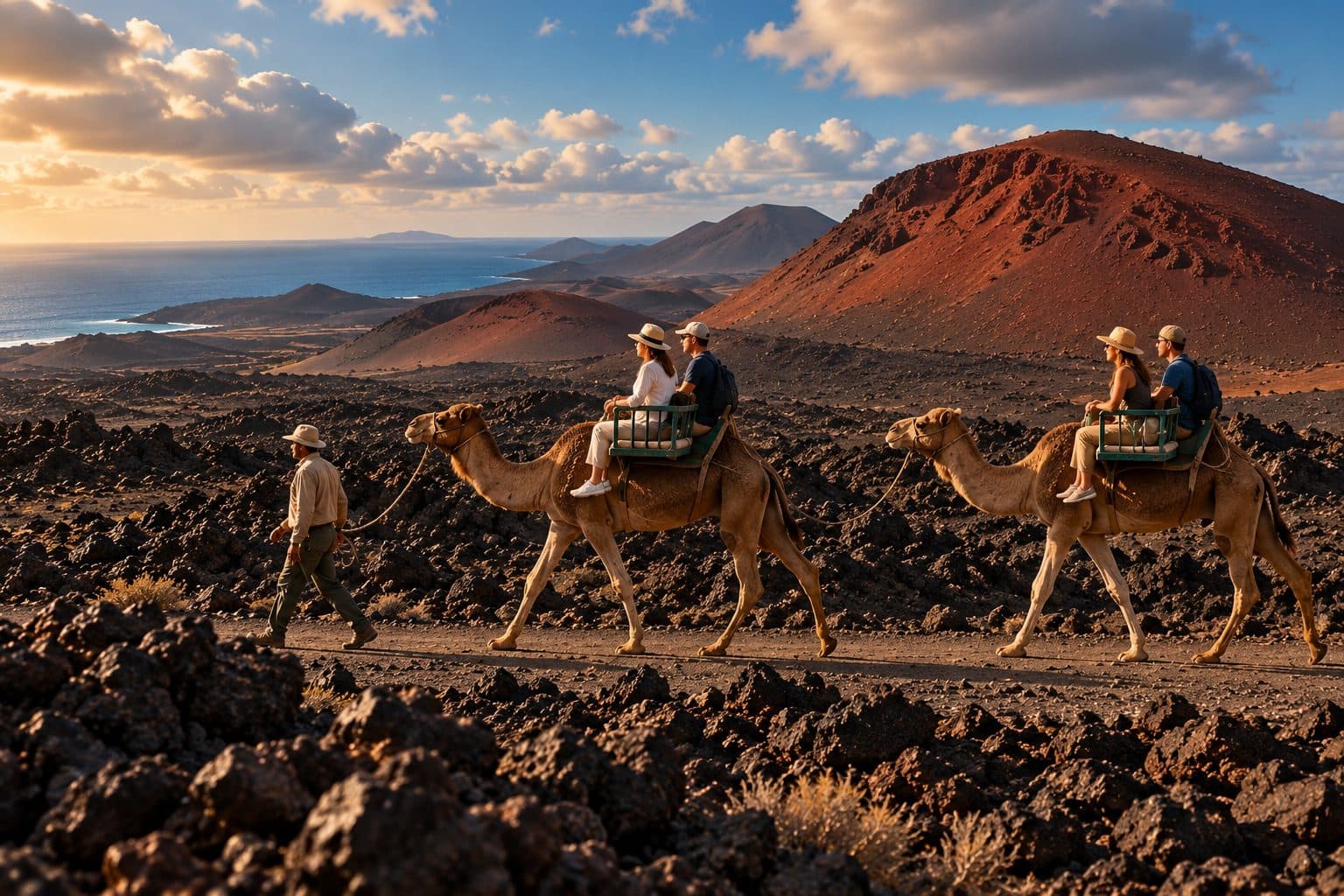
Camel rides in Lanzarote
Discover more →
Car hire in Lanzarote
Discover more →
The best excursions in Lanzarote
Discover more →
Tours around Lanzarote
Discover more →Punta Mujeres: The Fishing Village of Natural Pools
Discover more →San Ginés Festival: Arrecife's Biggest Summer Party
Discover more →Lanzarote Food Guide: Eating Like a Local on a Volcanic Island
Discover more →Puerto del Rosario City Guide: The Real Capital of Fuerteventura
Discover more →Costa Teguise City Guide: Beaches, Wind and the Pueblo Marinero
Discover more →Playa Blanca City Guide: Lanzarote's Sunny Southern Harbour
Discover more →Yaiza and El Golfo: Lanzarote's Green Lagoon and Prettiest Village
Discover more →Puerto del Carmen Neighbourhoods: Centro, Los Pocillos and Matagorda
Discover more →Day Trip from Lanzarote to Corralejo, Fuerteventura
Discover more →Las Palmas de Gran Canaria and the Canary Islands Region
Discover more →Famara and Caleta de Famara: the Wild Side of Lanzarote
Discover more →Arrecife City Guide: the Capital of Lanzarote Beyond the Guidebooks
Discover more →Lanzarote in Autumn: Weather, Beaches and the Best Things to Do
Discover more →Teguise City Guide: the Old Capital and the Sunday Market
Discover more →La Graciosa: How to Visit the Eighth Canary Island
Discover more →Haría and the North of Lanzarote: Valleys, Cliffs and Palm Groves
Discover more →Tinajo and the Volcanic North of Lanzarote
Discover more →Lanzarote in Winter: Weather, Festivals and the Best Things to Do
Discover more →San Bartolomé City Guide: The Agricultural Heart of Lanzarote
Discover more →Lanzarote in Spring: Weather, Beaches and the Best Things to Do
Discover more →Órzola and the Far North: the Fishing Village at the End of the Road
Discover more →Lanzarote in Summer: Long Days, Warm Sea and the Island at Its Best
Discover more →Puerto Calero City Guide: The Marina and the Quiet Side of Lanzarote
Discover more →Maspalomas City Guide: The Dunes and the Sunny South of Gran Canaria
Discover more →Christmas and New Year in Lanzarote: Winter Sun, Fiestas and Local Traditions
Discover more →Betancuria and the Heart of Fuerteventura: the White Town in the Green Valley
Discover more →La Geria and the Volcanic Vineyards of Lanzarote
Discover more →Ironman Lanzarote 2027: the Race, the Route and Race Week
Discover more →Timanfaya National Park: How to Visit the Fire Mountains of Lanzarote
Discover more →The César Manrique Route: The Man Who Built Modern Lanzarote
Discover more →Hiking in Lanzarote: The Best Walks on a Volcanic Island
Discover more →Papagayo Beaches: The Wild Southern Coves of Lanzarote
Discover more →Sea Safety in Lanzarote: How to Read the Water Like a Local
Discover more →Lanzarote Markets: The Complete Weekly Market Guide
Discover more →Carnival in Lanzarote: The Wildest Week on the Island
Discover more →Easter in Lanzarote: Semana Santa and Spring on the Island
Discover more →Day Trip to Jandía and Morro Jable from Lanzarote
Discover more →Romería de los Dolores: Lanzarote's Biggest Pilgrimage
Discover more →El Cotillo and the Wild North-West Coast of Fuerteventura
Discover more →Stargazing in Lanzarote: Dark Skies Over the Volcanoes
Discover more →La Santa: the Surf Village on Lanzarote's Wild West Coast
Discover more →Playa Honda and Matagorda: The Quiet Coast Next to the Airport
Discover more →Fiestas del Carmen: Lanzarote Honours the Sea
Discover more →Tías and the Inland Villages of Southern Lanzarote
Discover more →Guatiza and the Cactus Garden: The Green Jewel of Lanzarote
Discover more →Isla de Lobos: Day Trip to the Secret Island near Lanzarote
Discover more →Maspalomas City Guide: The Dunes and the Sunny South of Gran Canaria: related services and areas of Lanzarote
🔗 Services in Lanzarote
📍 Areas and towns of Lanzarote

Meet Zack — your adventurous guide in Lanzarote
Founder · adventurer at heart
Elegant on the outside, adventurer at heart. Zack is the one who shows up with a big smile and the perfect plan for your day. Fun, easy-going and always ready for one more adventure, he knows every corner of Lanzarote — and he tailors every experience to your needs. Tell him who you are travelling with and what you love: he takes care of the rest, with the best advice and a joke ready to go.
Your adventure starts with a smile. — Zack
Come and visit us at the shop!
You'll find Zack Bike Lanzarote in Puerto del Carmen — pass by for a coffee, honest advice and the right plan for your days on the island.
🏠 Calle Roque Nublo 10, Puerto del Carmen, Lanzarote, Spain