
Romería de los Dolores: Lanzarote's Biggest Pilgrimage
Once a year the whole island walks to a tiny white chapel in the middle of the lava. On 15 September Lanzarote honours Nuestra Señora de los Dolores, the Virgin who legend says stopped a river of fire in 1736, and thousands of people in traditional dress fill the roads to Mancha Blanca with ox carts, guitars and timple music. It is the most Canarian day of the year. Here is the story behind it and how to be there.
⚡ Quick summary before you plan your days in Lanzarote
- What to know firstOnce a year the whole island walks to a tiny white chapel in the middle of the lava.
- Who it is forEvery September, Lanzarote does something you will not find in any beach brochure: it walks.
- Main optionsWhat the Romería de los Dolores Is · The Big Day: Carts, Parrandas and the Road to Mancha Blanca · Dates, Transport and How to Plan Your Day · What to Combine Around Tinajo and Mancha Blanca
- Duration, prices and detailsWhen is the Romería de los Dolores? The feast of Nuestra Señora de los Dolores falls on 15 September, an island holiday, and the fiestas run through the first two weeks of the month. The romería itself takes place on the big day of the…
- How to bookBook on WhatsApp · +34 603 27 93 06


📷 Gallery
🧭 Zack's 3-click Lanzarote experience planner
💬 Send my plan to Zack on WhatsApp
Because a tour should feel like travelling with a friend: Zack designs the route around your rhythm, your curiosity and your camera roll — and changes it whenever you wish.
What the Romería de los Dolores Is
Every September, Lanzarote does something you will not find in any beach brochure: it walks. From every corner of the island people set off before sunrise on foot, with guitars, food and family, heading for Mancha Blanca, a small village in the municipality of Tinajo where a white hermitage stands right at the edge of the lava fields. The occasion is the festividad of Nuestra Señora de los Dolores, patroness of the island and better known here as the Virgen de los Volcanes, the Virgin of the Volcanoes.
This is not a parade staged for visitors. It is the biggest act of popular devotion in Lanzarote and, after the Romería del Pino in Gran Canaria, the second largest pilgrimage of the whole Canary archipelago. It has been declared a Fiesta of National Tourist Interest, and when you stand on the road watching the carts come past you understand why: for one day the island shows you its real face, the one shaped by volcanoes, faith and stubbornness.
The heart of the matter is simple. The Virgin is credited with saving Tinajo and Mancha Blanca from the lava in 1736, and the island has been saying thank you ever since. Gratitude is the mood of the day, not solemnity. People sing, share food, greet strangers like old friends and walk for hours under the sun because they want to, not because someone told them to. If you only attend one local celebration during your stay, make it this one.
The celebration is bigger than a single day. The fiestas fill the first two weeks of September with folklore, craft markets and music around Tinajo and Mancha Blanca, and 15 September is an island holiday: shops and offices close, and the road to Tinajo is busy from first light. The town hall of Tinajo publishes the full programme at the end of August, so check the exact day of the romería before you plan anything else.
The Virgin who stopped the lava
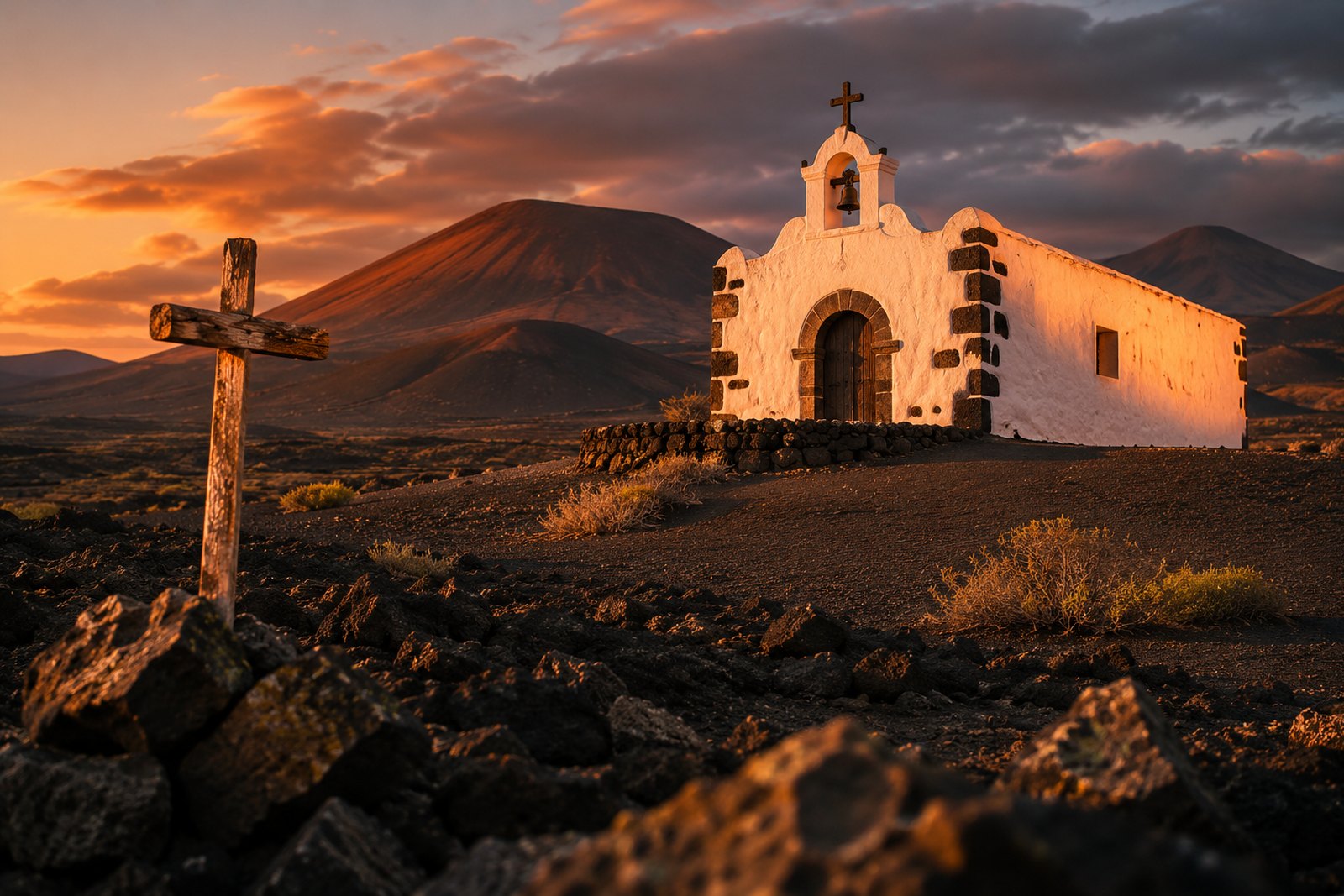
Between 1730 and 1736 the eruptions of Timanfaya buried roughly a third of Lanzarote under fire and ash, wiping out farmland, villages and the old capital's hinterland. In April 1736 a flow was closing in on Tinajo. A Franciscan friar gathered the people, they carried an image of the Virgin in procession from the small chapel of San Roque, and a penitent planted a heavy wooden cross in the path of the incandescent river. The tradition says the lava stopped right there, at the foot of that cross, on 16 April 1736. The spot is still marked, and it is now a declared Historic Site.
From a promise to a hermitage
The people promised the Virgin a chapel if the village survived. It did, and then, like people everywhere, they took their time building it. The story goes that in 1774 the Virgin appeared to a young shepherdess named Juana Rafaela and gently reminded them of their debt, leaving the mark of a hand on her shoulder. That did the trick. The hermitage rose over the following years, and in 1824, when a new eruption threatened the island, the procession was organised again and the volcano went quiet. That is when she became the Virgen de los Volcanes.
The Big Day: Carts, Parrandas and the Road to Mancha Blanca
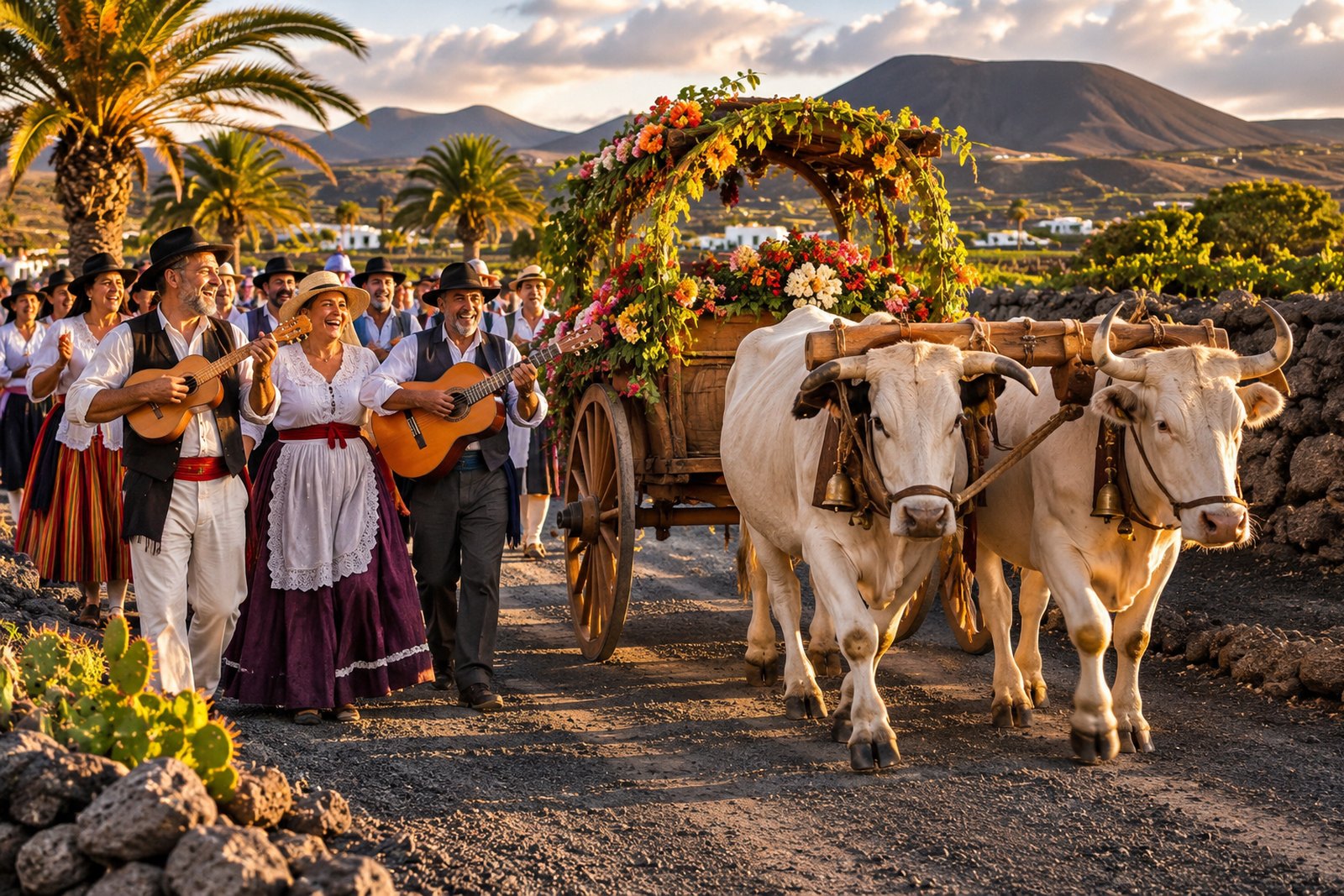
The day of the romería starts before the sun does. Groups of walkers leave from Arrecife, Teguise, San Bartolomé and dozens of villages in between, some of them covering twenty kilometres or more on foot. They carry guitars, timples, food and children. By midday everyone converges around Tinajo, and the shade of any palm tree, fig tree or zoco becomes a picnic ground where strangers share wine, cheese and stories while the guitars get tuned again.
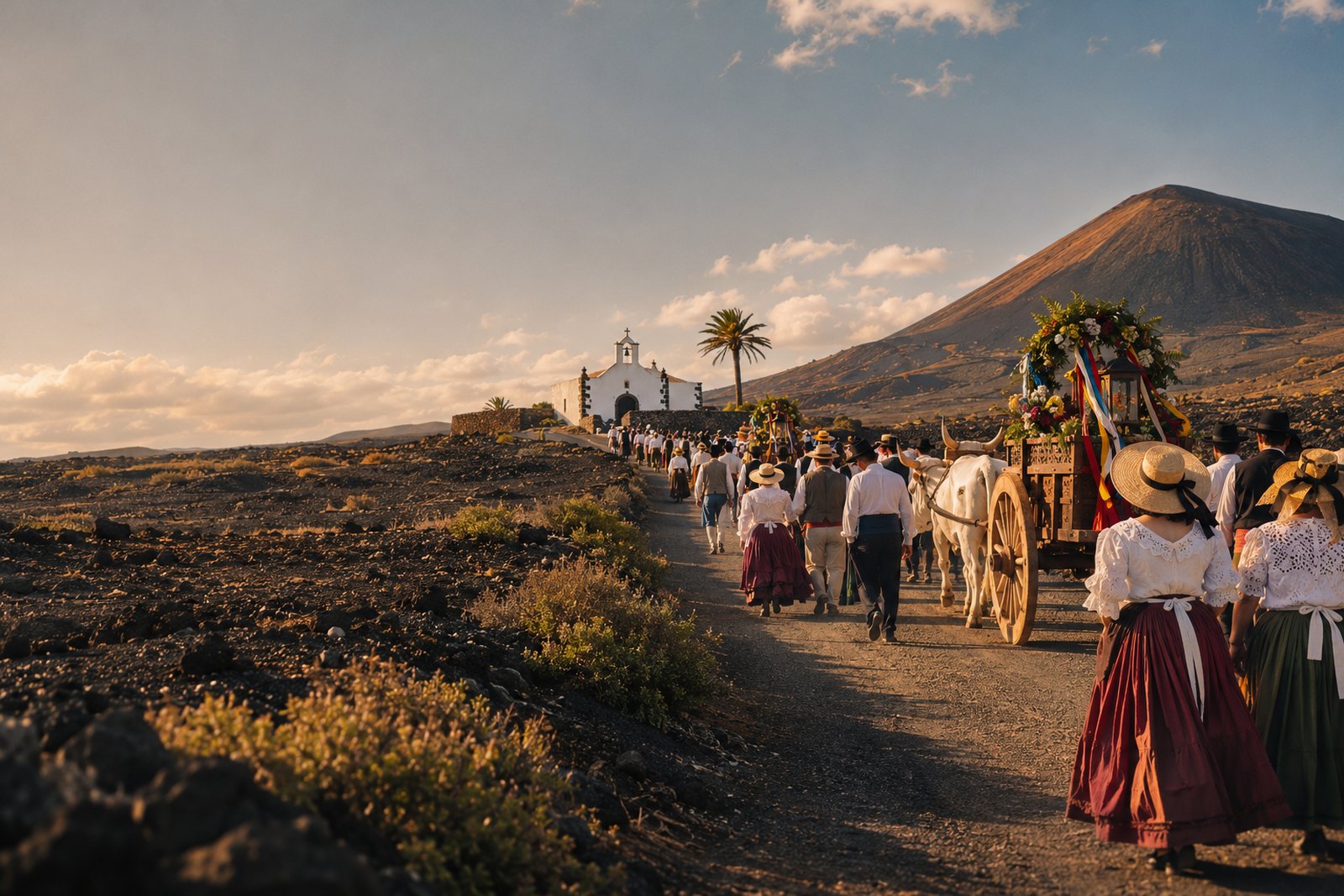
Then, in the afternoon, the procession itself sets off from around the parish church of San Roque and rolls towards Mancha Blanca. The stars of the show are the carts: rustic wooden wagons decorated with flowers, vines and palm leaves, pulled by oxen, donkeys and even camels, piled with the offerings people will place at the feet of the Virgin. Around them walk thousands of romeros in traditional Canarian dress, and the music never stops. Timbles, guitars and chácaras keep the rhythm and the singing keeps the mood up.
It is a slow procession and that is the point. The route is only a few kilometres but it takes hours, because everybody stops to greet everybody, the oxen set their own pace and nobody is in a hurry to arrive. The hermitage comes into view at dusk, its white walls glowing against the black ground, and by about nine in the evening the crowd fills the little square. The offerings arrive at the Virgin's feet, and most of the food is then given to people who need it more. Sharing is not an extra here: it is the whole idea.
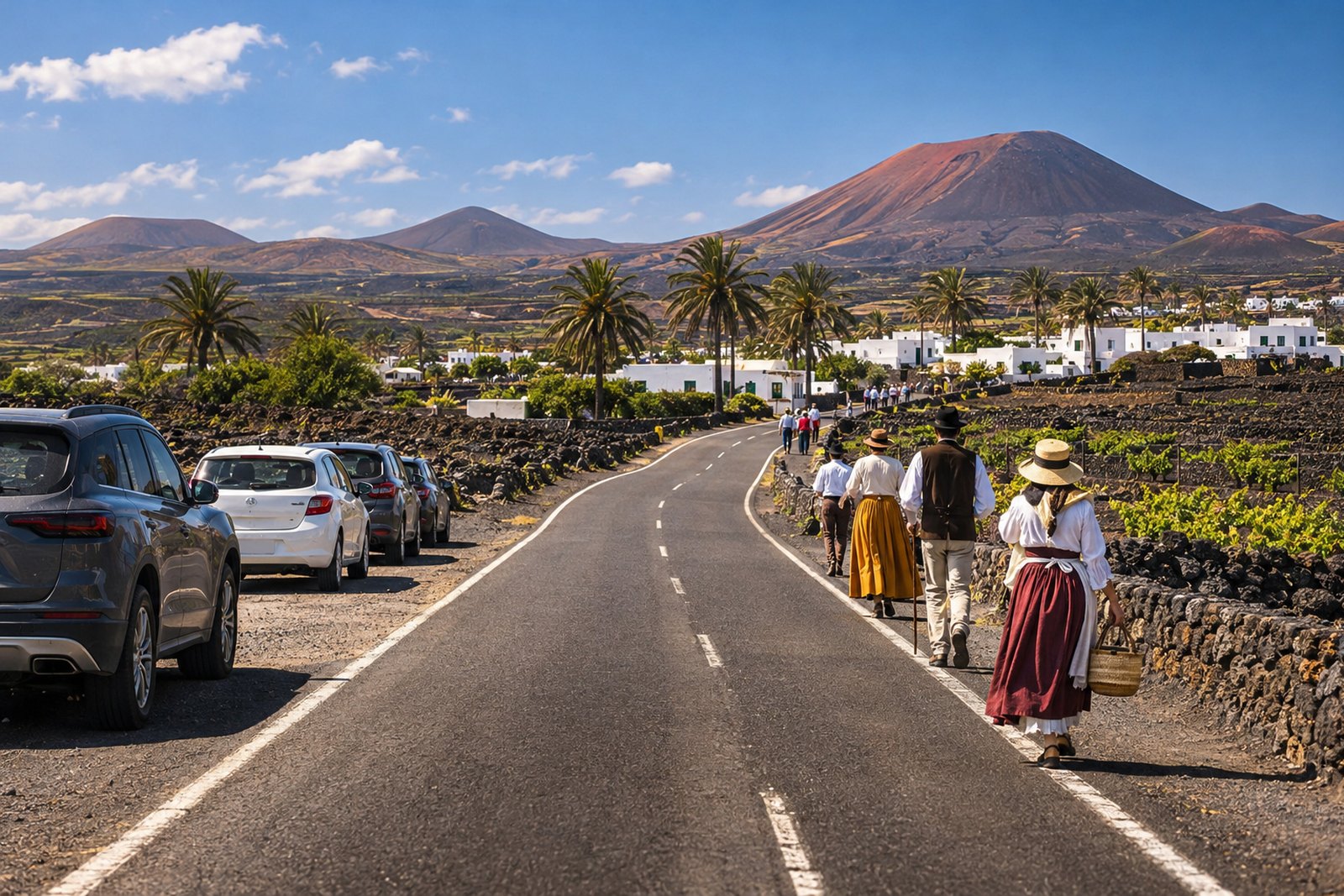
One thing worth knowing before you go: the romero outfit is not a costume. The organisation explicitly asks people to come dressed in traditional Canarian clothing, and visitors who turn up in beach wear stick out in the wrong way. It is easy to put together something respectful: white shirt, dark trousers or a long skirt, a straw hat, a silk scarf. Nobody expects perfection. They expect respect, and they reward it with a smile, a glass of wine and a place in the singing.
Walking with the romeros
You do not need an invitation to walk. Anyone can join along the route, and the most common way is to drive to Tinajo in the morning, park and walk the final stretch to Mancha Blanca with the procession. That last section gives you ninety per cent of the atmosphere for ten per cent of the effort. If you are fit and curious, start earlier from one of the villages and you will see the pilgrimage build slowly from a handful of walkers into a river of people.
Enyesques, wine and the offerings
Along the road you will hear the word enyesque, which is the local way of saying a snack shared in good company: wrinkled potatoes with mojo, goat cheese, cured meat, fresh bread and a splash of local wine from the vineyards you passed on the way. Households set up informal bars along the route and everyone is welcome. The offerings carried to the hermitage are non-perishable foods by request of the organisers, and they end up in social work, so the pilgrimage feeds people twice: once on the road and once afterwards.
Dates, Transport and How to Plan Your Day
The feast cycle runs through the first two weeks of September and 15 September is the anchor date, an island holiday with the solemn mass and the main religious acts. The romería takes place on the big day of the programme, close to the feast, and the whole calendar is published by the Tinajo town hall at the end of August. Book your accommodation early: this is one of the few weekends of the year when the island is full of Canarians rather than tourists, and rooms go.
Getting there is easiest with your own wheels. Mancha Blanca sits just off the LZ-56 between Tinajo and the Timanfaya road, about twenty-five minutes from Puerto del Carmen and thirty from Playa Blanca. A car hire in Lanzarote gives you the freedom to arrive early, leave when you want and combine the day with the volcanoes or the vineyards. If you would rather not drive after a long festive day, come with an organised group or arrange a driver in advance.
Parking is the one headache. The roads around Mancha Blanca fill up completely and the police close lanes early, so the smart move is to arrive before lunch, park on the approach roads and walk the last part. Bring cash for the roadside stalls, though most people are happier to hand you food than to sell it to you. Phone signal gets patchy when the crowd builds, so agree a meeting point with your group before you lose each other.
September in Tinajo is hot, dry and windy, and there is almost no shade between the villages. Comfortable closed shoes are a must because the ground is volcanic gravel and sharp in places. Carry more water than you think you need, sunscreen, a hat and a light layer for the evening, because once the sun drops behind the cones the temperature falls fast. Start early, rest at midday and enjoy the cool hours: that is how the locals do it.
Getting to Tinajo and Mancha Blanca
From the resorts of the south the simplest route is the LZ-2 inland, then the LZ-30 towards Tinajo and finally the short stretch to Mancha Blanca. Fuel up before you go: petrol stations are scarce between the cones. Buses run to Tinajo on ordinary days but the timetable is thin and the roads are closed for the romería, so assume you need a car, a taxi booked in advance or an organised outing. If you stay in Arrecife or the north, the drive across the island is beautiful and takes about forty minutes.
What to bring for a September day in the volcanoes
Think like a hiker, not like a beachgoer. Closed shoes, a hat, sunscreen, two litres of water per person, some cash and a fully charged phone. A small backpack beats a beach bag on gravel. If you plan to photograph the procession, bring a longer lens rather than a drone: flying over the romería is not welcome and the best pictures come from standing still and letting the crowd flow past you. And leave room in the bag: you will be given food.
What to Combine Around Tinajo and Mancha Blanca
The pilgrimage sits in the most volcanic corner of Lanzarote, so a day at the fiesta can easily become the heart of a wider loop. The day before, drive the Ruta de los Volcanes area and stand on the black plains where the 1730 flows stopped: once you know the story, the landscape stops being pretty and starts being dramatic. The Malpaís de la Arena and the wild coast north of Tinajo are empty, strange and completely free to visit.
Timanfaya is the obvious neighbour. The national park lies a few minutes down the LZ-67 and the fire mountains are the very lava fields the Virgin is credited with stopping. Visiting the park and then walking the romería route connects the two ends of the same story. The excursions in Lanzarote take care of tickets, timing and driving if you prefer to leave the logistics to someone who does this every day.
South of Mancha Blanca the ash turns into vineyards. In La Geria, vines grow in half-moons of black gravel, each one protected from the wind by a curved stone wall, and the bodegas are open for tasting. It is one of the most photographed landscapes of the island and it belongs to the same survival story as the hermitage. The wine tours in Lanzarote run through the valley, or you can drive it yourself in half an hour and stop wherever a sign says bodega.
For the full loop, base yourself in the south and give the area two days: volcanoes one day, fiesta and vineyards the other. If you are travelling with friends and want more adrenaline than a slow walk, the black tracks around Tinajo are the natural home of La Geria and the volcano country, and quad and buggy routes cross them daily. Whatever you choose, do not leave this corner of Lanzarote for the last day: it has a habit of making people change their plans.
Timanfaya and the fire mountains
The national park is the same lava the legend talks about, and it is the best possible warm-up for the fiesta. Go early: the coaches inside the park run all day but the light is best before noon and the queue is shortest right after opening. Two or three hours inside are enough, and then you can drive north towards Tinajo with the image of the fire mountains still fresh. In the evening of the romería day, watching those same cones turn red at sunset is the perfect full stop.
La Geria, Mancha Blanca and the slow loop
The nicest way to tie everything together is a slow loop: vineyards in the morning, lunch in Tinajo in the afternoon, and the procession at dusk. Add a stop at the little museum and craft stalls of Mancha Blanca during the fiesta days, where the Feria Insular de Artesanía brings together more than a hundred artisans from all over the Canaries. Buy something handmade, drink a glass of malvasía under the palm trees and let the day finish at the hermitage with everybody else.
You might also be interested in: Car hire in Lanzarote · The best excursions in Lanzarote · Wine tours in Lanzarote · Tours around Lanzarote · Volcano tours & rentals in Tinajo · Wine tours in La Geria · Lanzarote for families · Lanzarote for couples
Every adventure with Zack follows the same promise: no stress, no surprises, just the right experience at the right moment. Before you even arrive, he is already thinking about the wind, the light, the perfect hour and the little details that turn a holiday into a story you will tell for years. Romería de los Dolores: Lanzarote's Biggest Pilgrimage is not just a booking: it is the beginning of your Lanzarote story.
How it works: from the first message to your best memory
1. Choose your adventure
Scroll through this page and feel what fits you: Romería de los Dolores: Lanzarote's Biggest Pilgrimage, or maybe something different? Every traveller is unique, and Zack knows it. Look at the photos, read the tips, and if you are not sure, that is the best moment to write: telling him who you are and what you love is enough, and he will build the perfect day around it.
2. Book in one message
No forms, no call centres: one WhatsApp message and you are in. Zack replies with availability, the honest price and the plan for the day, including what to bring and when to start. The more days or people, the better the price — and if your plans change, you are talking to a real person who adapts.
3. Live the experience
This is where Lanzarote shows off. The island unfolds in colours you did not expect: black lava, red volcanoes, turquoise water and light that makes everything look like a film. With Romería de los Dolores: Lanzarote's Biggest Pilgrimage you enjoy it your way, with a local team watching over every detail so that your only job is to have the time of your life.
4. Back home, happy
The tan fades, the memories do not. You go home with a phone full of photos, a heart full of stories and that feeling of having discovered a place rather than just visited it. Friends will ask for your itinerary: that is when you know you chose the right adventures.
5. Tell the world
If Zack and his team made your holiday special, the best thank you is a review on Google Maps: sixty seconds that help other travellers find the same magic, and make a local team very proud. Share your story, your photos and your tips — and become part of the Zack Lanzarote family.
Frequently asked questions
When is the Romería de los Dolores?
The feast of Nuestra Señora de los Dolores falls on 15 September, an island holiday, and the fiestas run through the first two weeks of the month. The romería itself takes place on the big day of the programme near the feast date. The Tinajo town hall publishes the full calendar at the end of August, so check it before you travel.
Can anyone join the pilgrimage?
Yes. Anyone can walk along the route, and the easiest way is to join in Tinajo for the last stretch to Mancha Blanca. The organisation asks people to dress in traditional Canarian style: white shirt, long skirt or dark trousers, straw hat. Bring non-perishable food as an offering if you like, and expect to share everything you carry.
How do I get to Mancha Blanca?
The village sits between Tinajo and the Timanfaya road, about twenty-five minutes from Puerto del Carmen by car. Roads close early for the romería, so arrive before lunch and walk the last part. For the rest of your stay, a car hire in Lanzarote or an organised outing makes the whole volcanic corner easy to explore.
How do I book bikes, cars or tours in Lanzarote?
Message me on WhatsApp at +34 603 27 93 06 or come to Zack Bike Lanzarote, Calle Roque Nublo 10 in Puerto del Carmen. Kids' bikes are €10 per day, city and trekking bikes €15, mountain bikes €20 and e-bikes €30, and the price drops the longer you keep the bike. Cars, tours and other services on request.
You may also like
Car hire in Lanzarote
Discover more →
The best excursions in Lanzarote
Discover more →
Wine tours in Lanzarote
Discover more →
Tours around Lanzarote
Discover more →Punta Mujeres: The Fishing Village of Natural Pools
Discover more →San Ginés Festival: Arrecife's Biggest Summer Party
Discover more →Lanzarote Food Guide: Eating Like a Local on a Volcanic Island
Discover more →Puerto del Rosario City Guide: The Real Capital of Fuerteventura
Discover more →Costa Teguise City Guide: Beaches, Wind and the Pueblo Marinero
Discover more →Playa Blanca City Guide: Lanzarote's Sunny Southern Harbour
Discover more →Yaiza and El Golfo: Lanzarote's Green Lagoon and Prettiest Village
Discover more →Puerto del Carmen Neighbourhoods: Centro, Los Pocillos and Matagorda
Discover more →Day Trip from Lanzarote to Corralejo, Fuerteventura
Discover more →Las Palmas de Gran Canaria and the Canary Islands Region
Discover more →Famara and Caleta de Famara: the Wild Side of Lanzarote
Discover more →Arrecife City Guide: the Capital of Lanzarote Beyond the Guidebooks
Discover more →Lanzarote in Autumn: Weather, Beaches and the Best Things to Do
Discover more →Teguise City Guide: the Old Capital and the Sunday Market
Discover more →La Graciosa: How to Visit the Eighth Canary Island
Discover more →Haría and the North of Lanzarote: Valleys, Cliffs and Palm Groves
Discover more →Tinajo and the Volcanic North of Lanzarote
Discover more →Lanzarote in Winter: Weather, Festivals and the Best Things to Do
Discover more →San Bartolomé City Guide: The Agricultural Heart of Lanzarote
Discover more →Lanzarote in Spring: Weather, Beaches and the Best Things to Do
Discover more →Órzola and the Far North: the Fishing Village at the End of the Road
Discover more →Lanzarote in Summer: Long Days, Warm Sea and the Island at Its Best
Discover more →Puerto Calero City Guide: The Marina and the Quiet Side of Lanzarote
Discover more →Maspalomas City Guide: The Dunes and the Sunny South of Gran Canaria
Discover more →Christmas and New Year in Lanzarote: Winter Sun, Fiestas and Local Traditions
Discover more →Betancuria and the Heart of Fuerteventura: the White Town in the Green Valley
Discover more →La Geria and the Volcanic Vineyards of Lanzarote
Discover more →Ironman Lanzarote 2027: the Race, the Route and Race Week
Discover more →Timanfaya National Park: How to Visit the Fire Mountains of Lanzarote
Discover more →The César Manrique Route: The Man Who Built Modern Lanzarote
Discover more →Hiking in Lanzarote: The Best Walks on a Volcanic Island
Discover more →Papagayo Beaches: The Wild Southern Coves of Lanzarote
Discover more →Sea Safety in Lanzarote: How to Read the Water Like a Local
Discover more →Lanzarote Markets: The Complete Weekly Market Guide
Discover more →Carnival in Lanzarote: The Wildest Week on the Island
Discover more →Easter in Lanzarote: Semana Santa and Spring on the Island
Discover more →Day Trip to Jandía and Morro Jable from Lanzarote
Discover more →Romería de los Dolores: Lanzarote's Biggest Pilgrimage
Discover more →El Cotillo and the Wild North-West Coast of Fuerteventura
Discover more →Stargazing in Lanzarote: Dark Skies Over the Volcanoes
Discover more →La Santa: the Surf Village on Lanzarote's Wild West Coast
Discover more →Playa Honda and Matagorda: The Quiet Coast Next to the Airport
Discover more →Fiestas del Carmen: Lanzarote Honours the Sea
Discover more →Tías and the Inland Villages of Southern Lanzarote
Discover more →Guatiza and the Cactus Garden: The Green Jewel of Lanzarote
Discover more →Isla de Lobos: Day Trip to the Secret Island near Lanzarote
Discover more →Romería de los Dolores: Lanzarote's Biggest Pilgrimage: related services and areas of Lanzarote
🔗 Services in Lanzarote
📍 Areas and towns of Lanzarote
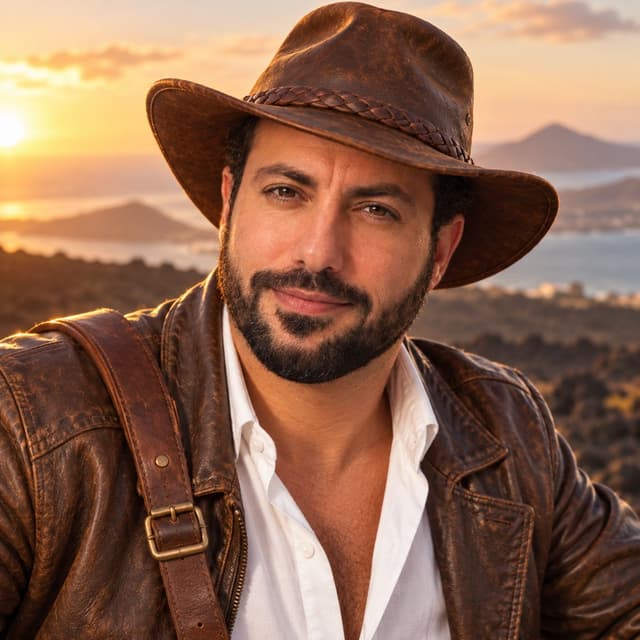
Meet Zack — your adventurous guide in Lanzarote
Founder · adventurer at heart
Elegant on the outside, adventurer at heart. Zack is the one who shows up with a big smile and the perfect plan for your day. Fun, easy-going and always ready for one more adventure, he knows every corner of Lanzarote — and he tailors every experience to your needs. Tell him who you are travelling with and what you love: he takes care of the rest, with the best advice and a joke ready to go.
Your adventure starts with a smile. — Zack
Come and visit us at the shop!
You'll find Zack Bike Lanzarote in Puerto del Carmen — pass by for a coffee, honest advice and the right plan for your days on the island.
🏠 Calle Roque Nublo 10, Puerto del Carmen, Lanzarote, Spain