Arrecife City Guide: What to See in the Capital of Lanzarote
Most visitors cross Arrecife at speed, on the road from airport to resort, and never see what they pass. The capital of Lanzarote is no museum town: it is a living Canarian city built around a saltwater lagoon, a working fishing harbour and a fortress guarding the bay. In one day you can wander the old quarter, swim on a Blue Flag beach and watch the sun drop into the ocean from an eighteenth-century castle. This is Zack's guide to his home city.
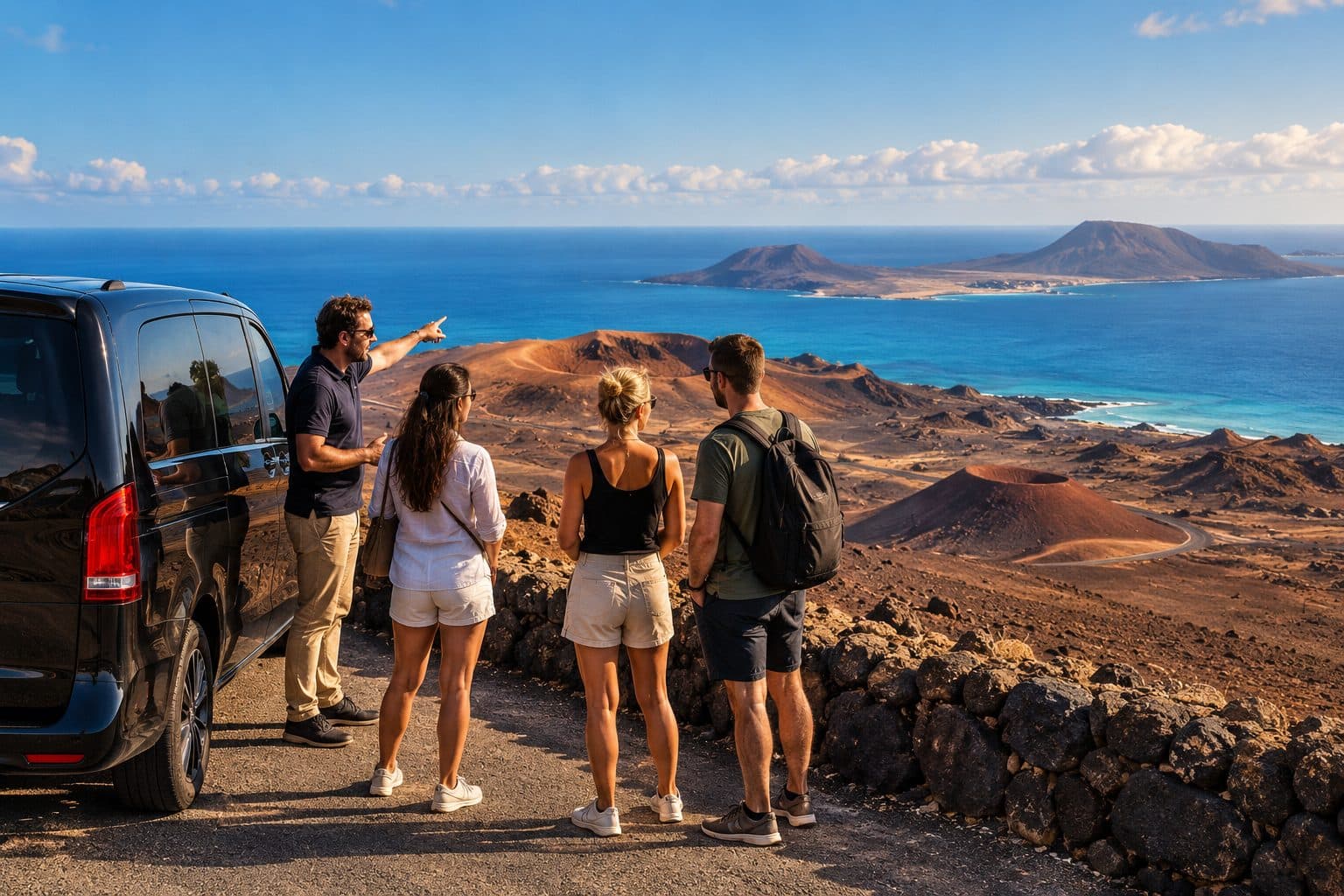

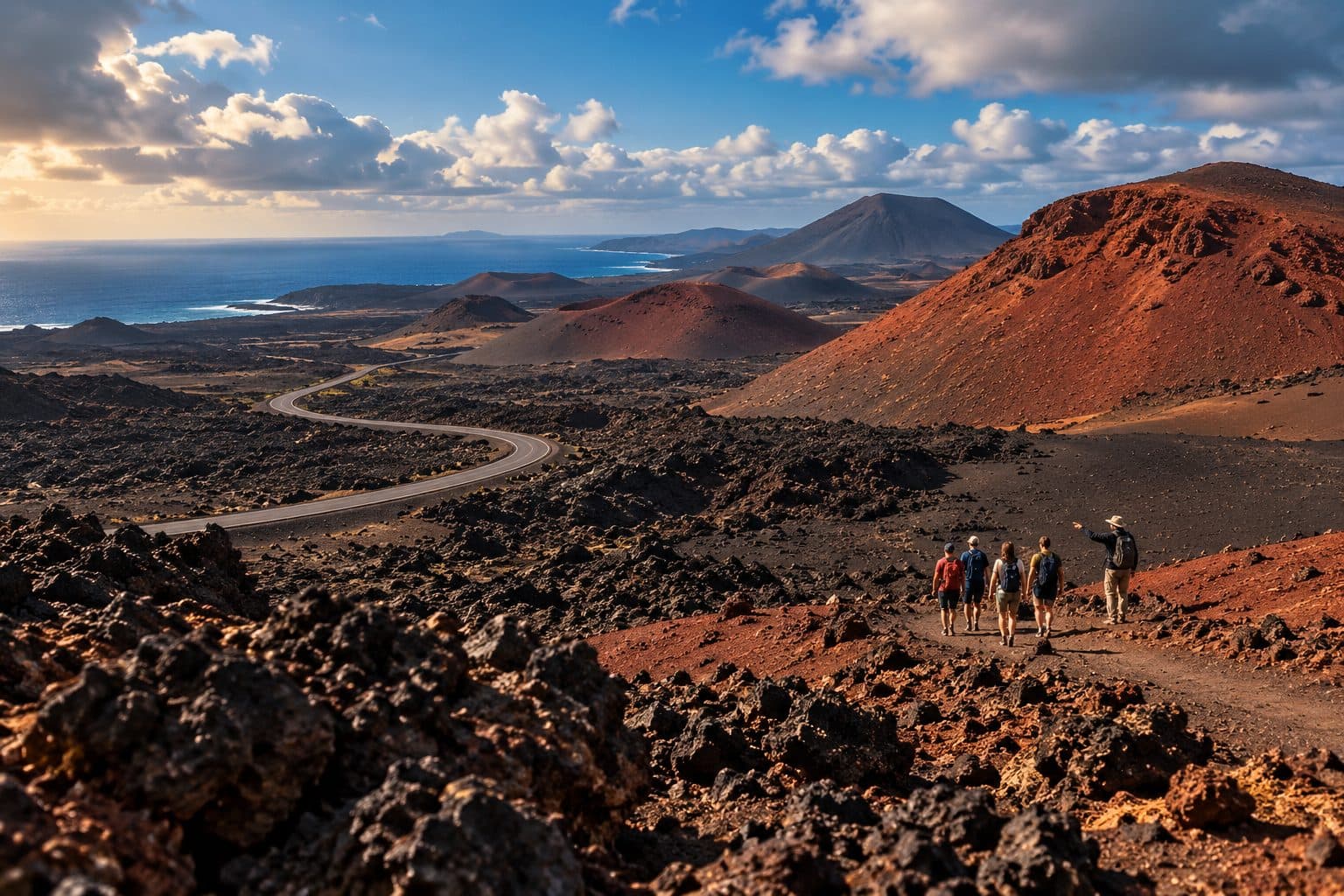

Because a tour should feel like travelling with a friend: Zack designs the route around your rhythm, your curiosity and your camera roll — and changes it whenever you wish.
Arrecife: the capital nobody expects
Arrecife does not try to impress you, and that is exactly its charm. This is where Lanzarote keeps its banks, its fish market, its buses and its Saturday mornings, and where the island's real rhythm is easiest to feel. The seafront hums with old men watching the boats, kids scooting around the lagoon and office workers grabbing a coffee before the shops open. Nothing here is staged for visitors, which means what you see is genuine: a working Atlantic capital that happens to sit on one of the most beautiful coastlines in the Canaries.
The city is small enough to cross on foot in twenty minutes and organised around two anchors: the Charco de San Ginés, the seawater lagoon at the edge of the old town, and the Avenida Marítima, the long seafront road that follows the bay south past the harbour to Playa del Reducto. Between them lies a tangle of pedestrian streets, plazas and shop-lined lanes that reward an hour of aimless wandering. Keep your map in your pocket: the pleasure of Arrecife is turning a corner and finding a whitewashed church, a bakery or a terrace full of locals.
From fishing village to island capital
Arrecife grew around a natural jetty of black lava where fishing boats still pull up today, and for centuries it was exactly that: a village of sailors and salt workers. Only in 1852 did it take the title of island capital from Teguise, a move driven by trade and the sea rather than by politics. You can still read that history in the streets, from the sailors' houses around El Charco to the old customs buildings along the port. It is a modest history told without fanfare, and following it through town takes an afternoon of very pleasant curiosity.
El Charco de San Ginés, the heart of the city
Every capital has a square; Arrecife has a lagoon. El Charco de San Ginés is a natural saltwater pool at the mouth of an old ravine, ringed by white houses, fishing boats and the seventeenth-century church of San Ginés. Mornings here are quiet and silvery; evenings turn the water into a mirror of orange lights while tapas bars fill the surrounding lanes. Sit on the wall, order something cold and watch the pelicans argue with the fishermen. Locals will tell you this is where Arrecife really lives, and after ten minutes on that wall you will agree.
A city that still works like a town
What makes Arrecife special among Canarian capitals is its scale. Nobody commutes for hours, the market is a daily ritual and the same faces run the same shops for decades. Come on a weekday morning and you see the real thing: housewives choosing tomatoes, bakers pulling out the second batch of bread, mechanics arguing politely about football. It is warm, safe and wonderfully ordinary, and if you love places where tourism is a guest rather than the host, Arrecife wins you over fast.
The festival of San Ginés
Every August the capital lets its hair down for the festival of San Ginés, its patron saint, and for a few days the whole city drifts between the lagoon and the harbour with music, fireworks and food stalls. There are romerías, open-air concerts, dancing in the squares and a maritime procession that ties the party to the sea that pays the bills. It is loud, warm and completely unpretentious, the opposite of a staged tourist show. If your holiday falls in late August, drop the resort programme for one evening and join in: fish grilled in the street, bands playing late and nobody caring where you come from. The whole thing happens around the water, which is exactly where you want to be in August. Zack's tip: arrive early, park outside the centre and walk in with the crowd.
What to see: fortresses, lagoon and beach
Arrecife's sightseeing is not a checklist of monuments but a string of small pleasures along the water. The old town gathers around El Charco, the seafront boulevard runs south to the city beach, and two stone fortresses bookend the bay like punctuation marks. Everything sits within a comfortable loop of about two hours at walking pace, though you should stretch that to a full day once swimming, lunch and a long sunset are added to the plan. Wear something comfortable and keep the sea on your left.
One piece of local wisdom before you start: Arrecife is at its best in the soft hours. Early morning gives you empty streets and fishermen unloading the catch; late afternoon brings golden light on the stone and the whole city drifting towards the water. Midday in summer is hot and sleepy, the perfect excuse for a long lunch or the cool calm of a museum. Plan the rhythm and the city does the rest.
Castillo de San Gabriel and the Puente de las Bolas
Sitting on a small lava islet at the harbour mouth, the Castillo de San Gabriel has watched over Arrecife since the late sixteenth century, when pirates were a seasonal fact of life. You reach it along the Puente de las Bolas, a stone bridge guarded by two stone cannonballs that is worth the walk for the photos alone. Inside there is a small archaeological museum with Guanche pottery and a battlement terrace with the finest harbour view in town. Go at golden hour and you will understand why every postcard of Arrecife is taken from this bridge.
El Charco and the Iglesia de San Ginés
The lagoon and its church form the postcard image of the capital. The Iglesia de San Ginés dates from the seventeenth century, simple and white, with a bell tower that once guided boats back to port. Around it, the old quarter keeps its low houses, tiny groceries and a growing number of galleries and cafés. Walk the whole perimeter of the lagoon: every angle gives a different picture, and the little footbridge at the far end is the classic viewpoint. After dark the reflections on the water make this the most romantic corner of the city.
Playa del Reducto
Right in the centre, Playa del Reducto is the city's living room: a sheltered crescent of golden sand with calm, shallow water, palm trees and a promenade busy with joggers and prams. It flies a Blue Flag, has lifeguards in season and is safe for children, which makes it the easiest swim of any capital city Zack knows. There are sunbeds, showers and cafés behind the sand, and the walk north along the Avenida Marítima back to El Charco takes twenty breezy minutes.
A one-day itinerary, hour by hour
Here is Zack's own plan for a perfect Arrecife day. Start early at El Charco with a coffee while the boats unload, then cross the Puente de las Bolas and walk the battlements of San Gabriel before the heat arrives. Late morning, drift down Calle Real and the market, and sit down for fish around one o'clock. After lunch, take the long way to Playa del Reducto along the Avenida Marítima and give the afternoon to the water. Around seven, climb up to Castillo de San José for a drink and the sunset over the coast. Dinner in the old town, one last lap of the lagoon, and you have seen the capital the way locals use it, not the way tour buses do. Nothing is rushed and everything is close, so the plan bends easily around children, heat and appetite. If you only have half a day, keep the morning and the sunset and skip nothing else.
Art, sunsets and shopping
Beyond the monuments, Arrecife has a genuinely good cultural card to play. This is the capital of an artistic island, and it shows: galleries pop up in the old quarter, the fortress of San José doubles as a contemporary art museum, and the shopping streets are lively without being touristy. The nice surprise is the value, because everything here is priced for locals, from coffee to shoes. A rainy or too-hot afternoon disappears easily between a museum, a market and a long coffee watching the world go by.
Shopping in Arrecife is everyday rather than glamorous, and that is its strength. Calle Real is the main pedestrian artery, with Spanish high-street names, small boutiques and the occasional souvenir shop, while the streets around the Mercado Central add hardware stores, fabric shops and bakers that have not changed their window display in decades. If you want presents that do not scream holiday resort, look for local wine, mojo sauces, aloe products and island-made crafts right here.
Castillo de San José and the MIAC
At the southern end of the bay stands the Castillo de San José, an eighteenth-century fortress built to repel pirate raids and now home to the Museo Internacional de Arte Contemporáneo. The collection of Spanish and international art is small but sharp, the vaulted stone rooms stay cool in the heat, and the restaurant cut into the rock below is one of the smartest dinner addresses on the island. Even if modern art is not your thing, come for the sunset: the terrace looks straight down the coast towards Puerto del Carmen.
Calle Real and the Mercado Central
For a taste of daily life, head for the market. The Mercado Central fills the morning with fruit, fish, flowers and noise, and the surrounding streets specialise in the useful and the delicious: cheese shops, bakeries, hardware, fabric. This is where islanders actually shop, so prices are honest and the advice beats any guidebook. Go before lunch, fill a bag with local tomatoes and some Majorero cheese, and you have the perfect picnic for the beach at Reducto.
The Avenida Marítima and the working harbour
The seafront road is the city's stage. Fishing boats unload in the morning, small craft come and go all day, and the promenade fills with people doing the evening paseo. Walk it slowly from the port down to the Reducto and back: it is flat, it is beautiful and there is always a bench when you need one. Watch the nets, the crates and the gulls and you realise Arrecife is still a port city first, with everything else layered on top.
Arrecife on a rainy day
It does not rain often in Lanzarote, but when it does the capital is the best place on the island to be. Start at the MIAC in Castillo de San José, where the vaulted rooms are made for slow looking and the café serves coffee with a sea view. The Mercado Central is covered and full of life, the shops along Calle Real keep you dry for an hour, and cinemas, bookshops and bakeries sit within a few blocks of each other. Order something warm, watch the puddles fill in the lagoon and wait it out like a local. A wet afternoon here never feels wasted, and that is rare on a beach island. An hour later the light comes back, the pavement dries and the city looks like it has been washed for the occasion.
Eating, evenings and practical tips
Eating in Arrecife is one of the capital's quiet triumphs. This is where islanders come for fish, which means the standard is high and the prices are fair. Around El Charco and the old harbour, small restaurants serve the catch of the day simply grilled with wrinkled potatoes and mojo; along the seafront you find everything from tapas to Italian, and the modern kitchens near Castillo de San José are worth dressing up for. The set lunch of the day is the classic local move, eaten slowly and without regret.
Evenings are gentle and sociable. Start with a stroll around the lagoon as the light fades, pick a table for dinner, then let the night unfold on a terrace with a glass of local Malvasía. Arrecife is not a party town, the resorts handle that, but it has exactly the kind of warm, easy nightlife where conversations start at neighbouring tables. It feels safe everywhere, and the short ride back to the south coast is painless.
Where to eat in Arrecife
Follow the boats and you cannot go wrong: the restaurants around the old port and El Charco buy straight from the morning catch, and the fish could not be fresher. Order viejas, cherne or simply grilled sardines, add papas arrugadas with both mojos and finish with quesillo or bienmesabe. Meat eaters are happy too, with good steaks and goat dishes a street or two inland. Vegetarian options have improved a lot in recent years, and for a special evening the fortress restaurant at Castillo de San José combines art, stone walls and a view that does half the work. Book ahead at weekends and in high season, because the good tables fill up with locals first. Lunch menus run cheaper than dinner almost everywhere, and a long, slow meal in the middle of the day is the Canarian way to eat, so do not rush it. If you only need a quick bite, the bars around the market serve bocadillos, tortilla and fresh juices that will keep you going until evening. Vegetarians should look towards the newer kitchens near the lagoon, where island vegetables get real attention. And save room for dessert: quesillo, bienmesabe and a coffee with a view are the perfect full stop to a day in the capital. Eating well here is not a project, it is simply what happens when you sit down.
Getting to Arrecife and getting around
From Puerto del Carmen the capital is about fifteen minutes away by car or taxi, and buses run regularly along the coast. Having your own wheels makes the day much easier, which is why many of Zack's guests pick up car hire in Lanzarote before heading north: you arrive when you want, park once and stay until after sunset. Inside the city everything is walkable, but the flat seafront is also made for two wheels, and bike hire in Lanzarote turns the ride from Puerto del Carmen into part of the day out rather than a boring transfer.
Using Arrecife as a base
Staying in the capital has real advantages: authentic restaurants, real shops, a swimmable city beach and zero resort noise. It is also the natural hub of the island, with roads radiating out towards Timanfaya, the green north and the southern beaches. If you are based here, let Zack build your days around it: guided excursions in Lanzarote leave from your door, and everything in and around Arrecife is close enough to improvise. One message to +34 603 27 93 06 gets you a plan, not a call centre.
Zack's shop and prices
Anything you need for the day lives at Zack Bike Lanzarote, Calle Roque Nublo 10 in Puerto del Carmen, a short ride from the capital. Kids bikes are 10€ per day, city and trekking bikes 15€ per day, mountain bikes 20€ per day and electric bikes 30€ per day, and the rate drops the longer you rent. Cars, scooters, quads, boats and excursions are all on request: one message to Zack on WhatsApp at +34 603 27 93 06 and everything is arranged.
Arrecife with children
Arrecife works beautifully with children, and the beauty is that everything is close. The lagoon has ducks, space to run and ice-cream shops within reach; Playa del Reducto has calm shallow water, playgrounds and showers; and the flat promenade is made for scooters and small bikes. Zack rents kids bikes at 10€ per day, so the whole family can ride the seafront without arguments. The museums are small enough to hold their attention, lunch is early and easy, and if the day gets long, the castle visit doubles as an adventure. It is one of the few capital cities where a family day needs no logistics at all. Walk back along the harbour to watch the boats and the day ends on a high note before dinner.
You might also be interested in: Car hire in Lanzarote · Bike hire in Lanzarote · The best excursions in Lanzarote · Tours around Lanzarote · Rentals & excursions in Arrecife · Rentals & excursions in San Bartolomé · Lanzarote for families · Lanzarote for couples
Every adventure with Zack follows the same promise: no stress, no surprises, just the right experience at the right moment. Before you even arrive, he is already thinking about the wind, the light, the perfect hour and the little details that turn a holiday into a story you will tell for years. Arrecife City Guide: What to See in the Capital of Lanzarote is not just a booking: it is the beginning of your Lanzarote story.
How it works: from the first message to your best memory
1. Choose your adventure
Scroll through this page and feel what fits you: Arrecife City Guide: What to See in the Capital of Lanzarote, or maybe something different? Every traveller is unique, and Zack knows it. Look at the photos, read the tips, and if you are not sure, that is the best moment to write: telling him who you are and what you love is enough, and he will build the perfect day around it.
2. Book in one message
No forms, no call centres: one WhatsApp message and you are in. Zack replies with availability, the honest price and the plan for the day, including what to bring and when to start. The more days or people, the better the price — and if your plans change, you are talking to a real person who adapts.
3. Live the experience
This is where Lanzarote shows off. The island unfolds in colours you did not expect: black lava, red volcanoes, turquoise water and light that makes everything look like a film. With Arrecife City Guide: What to See in the Capital of Lanzarote you enjoy it your way, with a local team watching over every detail so that your only job is to have the time of your life.
4. Back home, happy
The tan fades, the memories do not. You go home with a phone full of photos, a heart full of stories and that feeling of having discovered a place rather than just visited it. Friends will ask for your itinerary: that is when you know you chose the right adventures.
5. Tell the world
If Zack and his team made your holiday special, the best thank you is a review on Google Maps: sixty seconds that help other travellers find the same magic, and make a local team very proud. Share your story, your photos and your tips — and become part of the Zack Lanzarote family.
Frequently asked questions
Is Arrecife worth a day of my holiday?
Absolutely. The capital shows you the side of Lanzarote that resorts cannot: a real market, a working harbour, a swimmable city beach, two castles and some of the best fish restaurants on the island, all within walking distance of each other.
How do I get to Arrecife from Puerto del Carmen?
About fifteen minutes by car or taxi, with regular buses along the coast. A rental car makes the day far more flexible, especially if you want to stay for sunset and dinner.
Can you swim at Playa del Reducto?
Yes. It is a sheltered Blue Flag beach with calm, shallow water, lifeguards in season and full facilities right in the city centre, one of the easiest city swims in the Canaries.
How do I book bikes, cars or excursions with Zack?
Message Zack on WhatsApp at +34 603 27 93 06 or pass by the shop at Calle Roque Nublo 10, Puerto del Carmen. Kids bikes are 10€ per day, city and trekking 15€, mountain 20€ and electric 30€ per day, cheaper for longer rentals. Other prices on request.
You may also like

Car hire in Lanzarote
Discover more →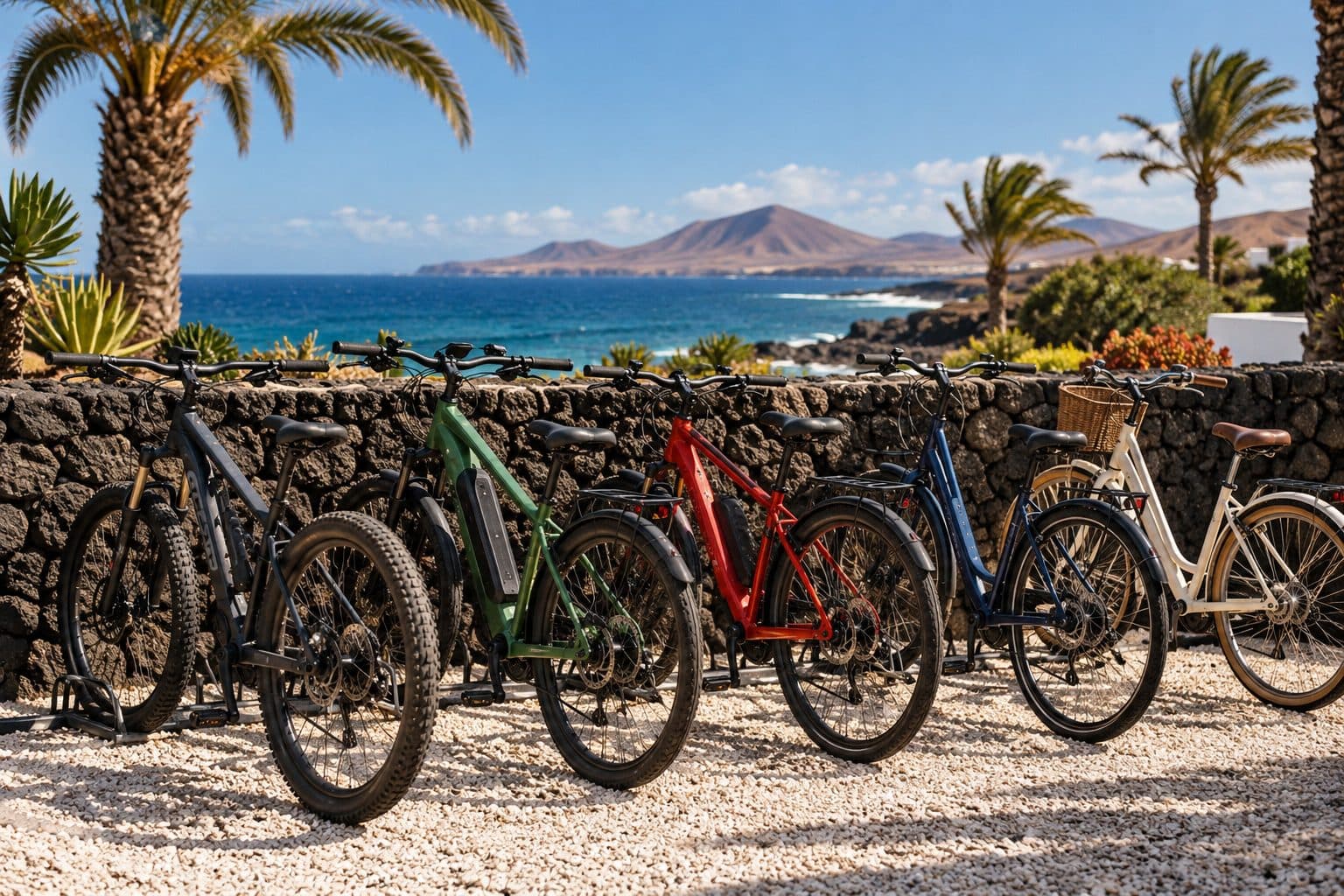
Bike hire in Lanzarote
Discover more →The best excursions in Lanzarote
Discover more →Tours around Lanzarote
Discover more →Puerto del Carmen Neighbourhoods: Centro, Los Pocillos and Matagorda
Discover more →Day Trip from Lanzarote to Corralejo, Fuerteventura
Discover more →Las Palmas de Gran Canaria and the Canary Islands Region
Discover more →Arrecife City Guide: What to See in the Capital of Lanzarote
Discover more →Costa Teguise Guide: Beaches, Families and Local Tips
Discover more →
Meet Zack — your adventurous guide in Lanzarote
Founder · adventurer at heart
Elegant on the outside, adventurer at heart. Zack is the one who shows up with a big smile and the perfect plan for your day. Fun, easy-going and always ready for one more adventure, he knows every corner of Lanzarote — and he tailors every experience to your needs. Tell him who you are travelling with and what you love: he takes care of the rest, with the best advice and a joke ready to go.
Your adventure starts with a smile. — Zack
Come and visit us at the shop!
You'll find Zack Bike Lanzarote in Puerto del Carmen — pass by for a coffee, honest advice and the right plan for your days on the island.
🏠 Calle Roque Nublo 10, Puerto del Carmen, Lanzarote, Spain